
Top Signs You Need Air Duct Cleaning Service – Don’t Ignore These
Here’s the direct answer most articles bury: you need air duct cleaning when you can confirm contamination inside the duct system itself, not just when your house feels dusty. Dust, odors, and uneven airflow can each point to a different root cause, and dirty ducts are only one of them. A filter that’s too small, a leaking return, or a system short-cycling will produce the exact same symptoms. So before you book anything, it pays to understand what each sign is actually telling you about your system in University City.
If reading this makes you want a trained eye on it instead of a flashlight and a hunch, call (888) 972-5826. We answer 24/7, with fast dispatch from 7am to 7pm.
Why “Dusty Registers” Isn’t Automatically a Duct Problem
Dust collecting on a supply register is the most cited sign of dirty ducts. It’s also the most misunderstood. A register face sits at the end of the line where conditioned air dumps into a room, and it will collect some dust no matter how clean the ductwork behind it is. Before you assume contamination, rule out the cheaper explanations:
- Undersized filter. A filter with too little surface area loads up fast, lets bypass air around the frame, and dumps that dust downstream.
- Leaking return air. A gap in a return duct in an attic, crawlspace, or garage pulls unfiltered air into the system and pushes it out your registers.
- Short cycling. A system that runs in short bursts never develops the steady airflow that helps carry dust to the filter.
- Filter seating. A filter that doesn’t seal in its slot lets air sneak past and carries debris into the supply side.
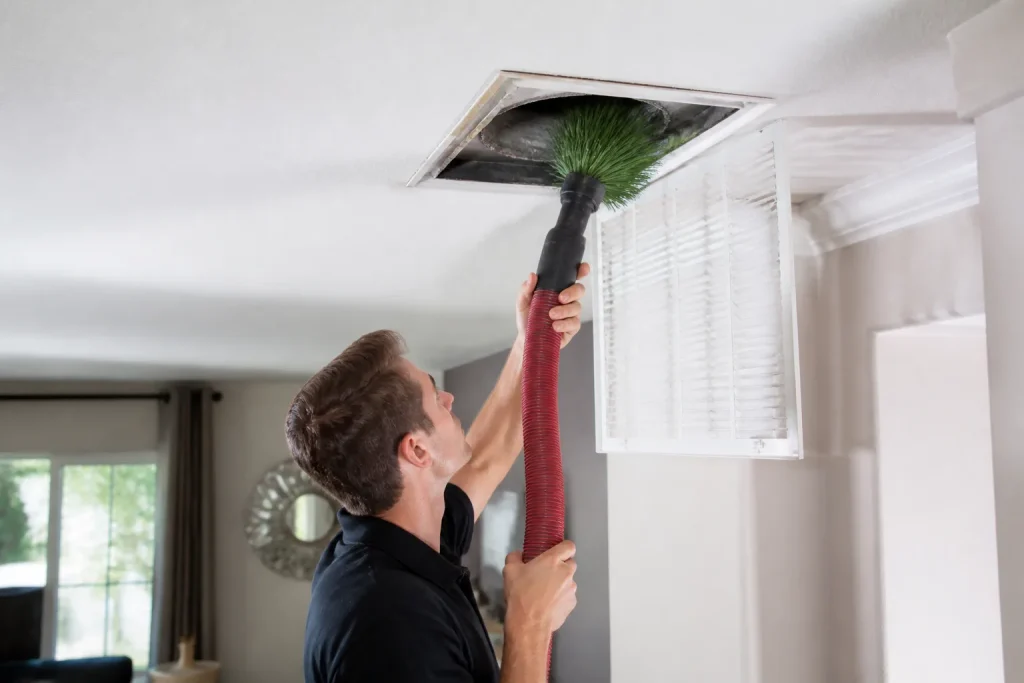
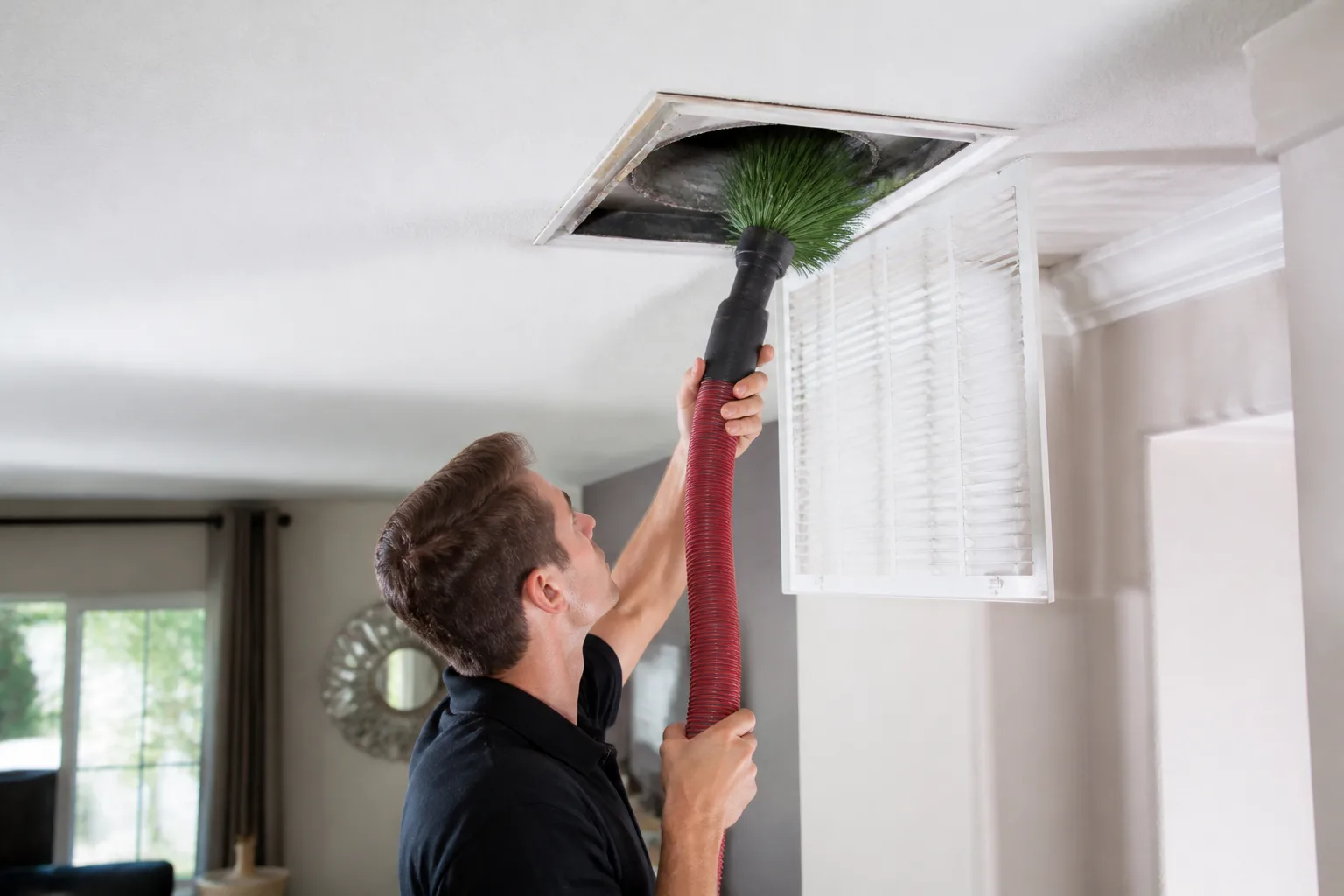
Here’s where a visual inspection changes the picture. If the register face is dusty but the duct throat and the first few feet of the branch line are clean to the touch, the ducts are not your problem. If you pull a register and find a matted coating on the duct walls, that’s contamination you can see, and that’s the point where cleaning makes sense. In our experience across University City, the register face alone tells you very little. The duct interior behind it tells you everything.
Odors: Musty Smell vs. Chemical Smell vs. “Something Died”
A smell coming from your vents is a stronger indicator than dust, but the type of smell steers which service you actually need. Odors travel on airflow, so wherever the air passes becomes the source. That doesn’t always mean the ducts need cleaning.
Musty, earthy, damp smell. This points to moisture, not surface dirt. A duct system holding damp air will grow biological growth on the liner, in the insulation, or in the coil area, and it’ll come back after a basic cleaning if you don’t find the source. Persistent musty odor after a cleaning is a sign of active moisture intrusion, typically a leak, condensation, or a humid crawlspace feeding damp air into a return.
Sharp chemical or “new plastic” smell. Often off-gassing from new materials, paint, or adhesives after a renovation. A sanitizing treatment can address residual odors, and whole-home products like an Aprilaire fresh-air or filtration setup can help dilute them.
Dead-animal or sewer-adjacent smell. A rodent or pest issue inside a duct, or a disconnected line pulling air from a bad space. This needs inspection before anything else, and a duct repair and sealing visit may be what fixes it.
The honest answer here: a smell tells you something is happening, but not what. You need eyes in the system to sort out the cause.
Uneven Airflow and Hot or Cold Rooms
One room too warm in summer, another too cold in winter. Uneven airflow is frequently attributed to dirty ducts, and sometimes that’s right. A heavily loaded branch line genuinely restricts flow to the rooms on that run. But it can also indicate a broken damper, a crushed flex duct, a disconnected joint, or a system that was never balanced properly.
What to check before you assume cleaning will fix it:
- Feel airflow at each register with a light tissue. Compare the strong rooms against the weak ones.
- Look for kinked or crushed flexible duct in the attic or crawlspace above the weak rooms.
- Check whether the weak rooms are at the end of the longest runs, which naturally get less air.
- Note whether the weak airflow appeared suddenly, which points to a failure, or has always been that way, which points to design or balance.
A duct cleaning visit can clear a genuinely restricted line in University City, but if the cause is a collapsed duct or a broken joint, cleaning won’t touch it. That’s why we offer duct repair and sealing as a separate service. Clean it, seal it, improve it; the middle step is the one most companies skip.
Allergy Flares and Ongoing Indoor Air Concerns
If household members sneeze more indoors than out, or allergy symptoms track with the HVAC coming on, the duct system is a reasonable suspect. Dust, pollen, pet dander, and settled debris all ride the air. It’s worth being precise, though: those particles can come from the ducts, from a dirty filter, from a poorly fitted filter, or from a return that’s drawing from an unfinished space.
For allergy-driven concerns, the answer usually isn’t duct cleaning alone. It’s the whole air pathway. That’s the logic behind our five service lines covering everything from intake to exhaust:
- Air duct cleaning with professional-grade Rotobrush and Nikro equipment, not consumer tools.
- HVAC cleaning, including the coil and blower, where contamination often collects.
- Air quality and sanitizing, using equipment and products from Honeywell and Aprilaire to address what cleaning can’t reach.
- Duct repair and sealing, so newly cleaned ducts don’t draw contaminants right back in.
- Dryer vent cleaning, which is more about safety than air quality but belongs in the same conversation for a whole-house view.
If you’re weighing a cleaning versus a whole-home air quality upgrade, that’s a conversation we can help with. Call (888) 972-5826 and we’ll talk through what fits your system.
Recent Renovation From an Urgent Trigger
This is the sign most people undervalue. General household dust builds slowly, and a light layer is normal. Renovation dust is different in kind. Drywall sanding produces fine particulate that hangs in the air for days, gets pulled into return air, and settles inside the ductwork. Sawdust, insulation fibers, and construction debris are larger and heavier, and they coat duct walls and clog dampers and coils.
What makes it urgent is what that debris does over time. Coated surfaces hold moisture, hurt airflow, and give the system somewhere for contamination to build. Much of it gets carried into the air handler and the coil, where it reduces efficiency and can freeze the coil in humid months. A filter catches some, but the finest dust slips past and lands inside the supply side.
If you’ve finished a kitchen renovation, an addition, or a full remodel in University City, a duct cleaning and HVAC cleaning afterward is a sensible step, not an optional one. Doing it once, right after the dust settles, beats letting it accumulate and re-circulate for seasons. This is the trigger we recommend acting on soon, rather than waiting for symptoms.
How to Do a Quick Visual Inspection at the Register and Air Handler
You can confirm a fair amount yourself before calling anyone, with no tools beyond a screwdriver and a flashlight. Here’s what to look for.
- Pull one supply register per room. Shine the light down the duct throat. Light dusting is normal. A visible matted layer, fuzzy growth, or debris that clumps is a sign of contamination.
- Check the return grille. Remove it and look at the inside of the return duct. It shouldn’t be visibly coated.
- Look at the filter. Is it the right size for the slot? Is it loaded? Is it seated snugly, or is air bypassing around the edges?
- Inspect the air handler area. Look for rust, standing moisture, or a damp smell in the cabinet around the coil. Moisture here means you have a different problem first.
- Check the return ducting in the attic or crawlspace. Look for crushed flex, disconnected joints, or visible gaps.
One note for safety: don’t open the air handler cabinet if you’re not comfortable around electrical components. Leave that to a trained technician. If you’d rather not do the inspection yourself, call (888) 972-5826. We answer 24/7, with fast dispatch from 7am to 7pm, Sunday through Friday.
When to Call a Pro
Call when you can see contamination inside the ducts, when musty odors persist, when a renovation has just wrapped, or when a duct looks crushed or disconnected. If the symptom is dust alone and the filter is the culprit, you can usually fix that without a service call. If you’re not sure which category your issue falls into, that’s exactly when a professional inspection pays for itself. Our technicians have up to 15 years of experience reading duct systems, and professional-grade equipment like our Abatement Technologies filtration gear means we can handle serious indoor air quality work, not just a routine cleaning.
Related services in University City: if your appointment includes a whole-system look, you may want to combine air duct cleaning with HVAC cleaning, and if it’s been a while, add dryer vent cleaning while we’re there. You can also learn more about our team on the University City Air Duct Cleaning homepage.
The Bottom Line
Most “signs you need duct cleaning” lists confuse symptoms with causes. Dust can mean a filter problem. Uneven airflow can mean a broken damper or a crushed duct. Odor can mean moisture, pests, or off-gassing. The one sign that’s hard to mistake is visible contamination inside the duct itself, and the one trigger worth acting on quickly is recent renovation dust. Get the cause right before you spend money on a fix.
- Verify before booking: pull a register and look down the duct throat.
- Musty odor after a cleaning means moisture, not surface dust.
- Renovation dust is heavier and more urgent than household dust.
- Uneven airflow often needs repair and sealing, not just cleaning.
- When in doubt, get it inspected. Free estimates make that a low-risk call.
If you’re in University City and need help, University City Air Duct Cleaning offers free estimates. Call (888) 972-5826. The price is set per job by the written estimate, agreed before any work starts, so you know what you’re paying before we touch a register. We answer 24/7, with fast dispatch from 7am to 7pm, Sunday through Friday, closed Saturday.
Frequently Asked Questions
The most reliable sign is visible contamination inside the duct, confirmed by pulling a register and looking down the throat with a flashlight. Matted dust, fuzzy growth, or debris that clumps means cleaning is warranted. Dust on the register face alone doesn’t confirm it; that can be a filter or return leak issue. If you’d rather have a trained eye on it, call (888) 972-5826. We answer 24/7, with fast dispatch from 7am to 7pm.
Yes, we recommend it. Renovation dust (especially drywall sanding fines) is far heavier than household dust, gets pulled into return air, and coats duct walls, dampers, and coils. Much of that reaches the air handler where it hurts airflow and efficiency. Cleaning once after the dust settles is more effective than letting it re-circulate all season. Call (888) 972-5826 for an honest read on whether your system needs it.
Because the smell is usually moisture, not surface dirt. If duct surfaces were cleaned but damp air is still entering the system from a leak, a humid crawlspace, or condensation in the cabinet, biological growth returns. You need to find the moisture source first, then consider a sanitizing treatment. Our team works with Honeywell and Aprilaire systems to address the root cause, and we can diagnose it for you at (888) 972-5826.
There’s no fixed interval that fits every home. Most systems benefit from a cleaning every few years, but some don’t need it at a given time and others need it sooner after a renovation, water intrusion, or a pest issue. The honest answer is to verify by inspection rather than follow a calendar. If you’re unsure, call (888) 972-5826 for a free estimate and a straight assessment.
Written by the team at University City Air Duct Cleaning.
Need Air Duct Cleaning Help?
Call University City Air Duct Cleaning - the local pro we connect you with is licensed and insured, here with fast help in University City.
(888) 972-5826