
Last updated November 22, 2026
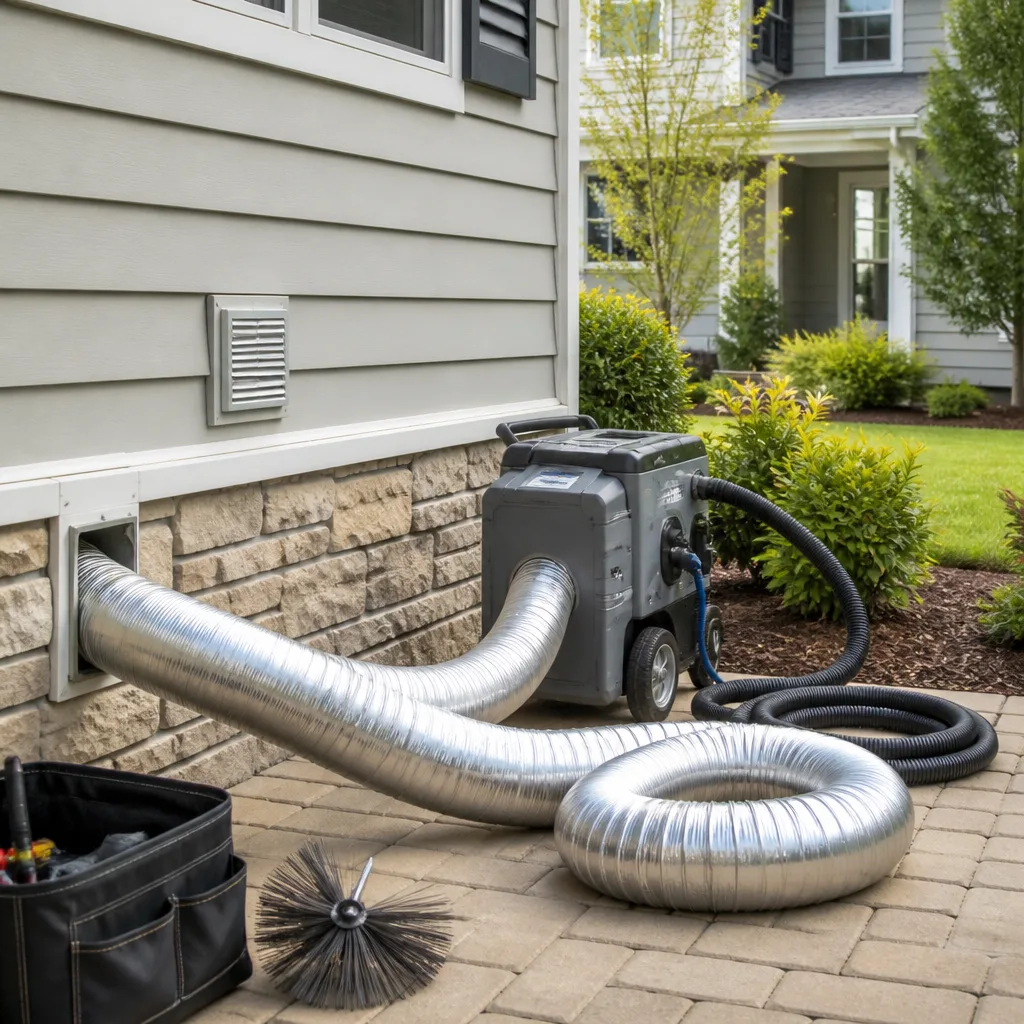 Whole-home duct cleaning
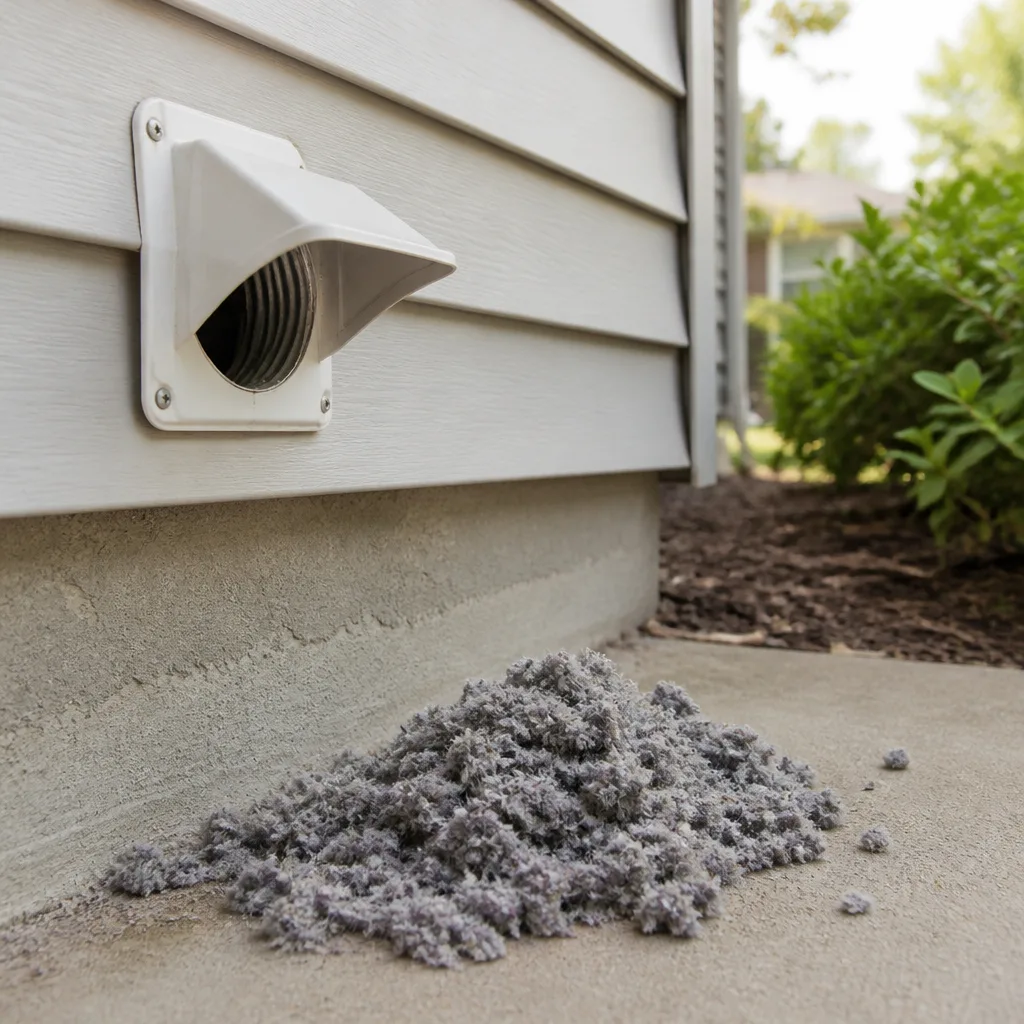 Dryer vent cleaning
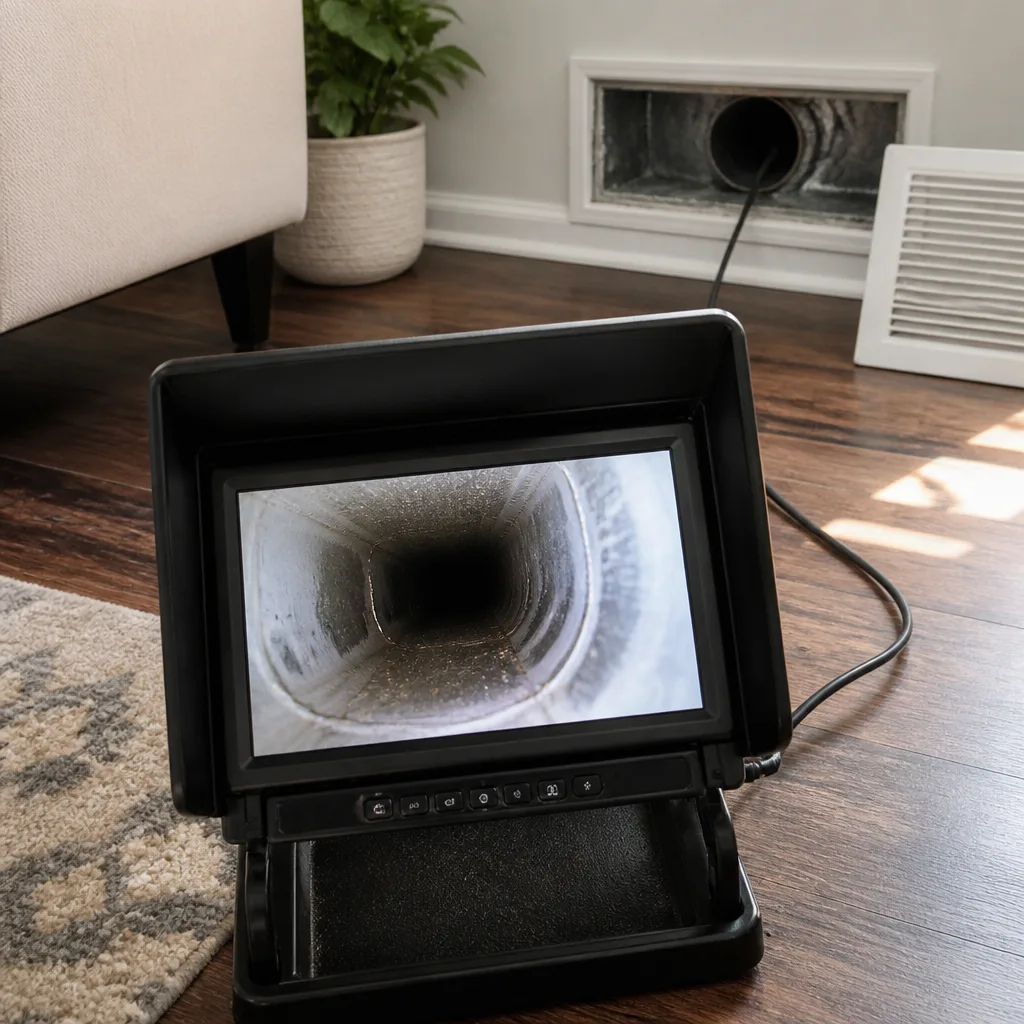 Camera inspection
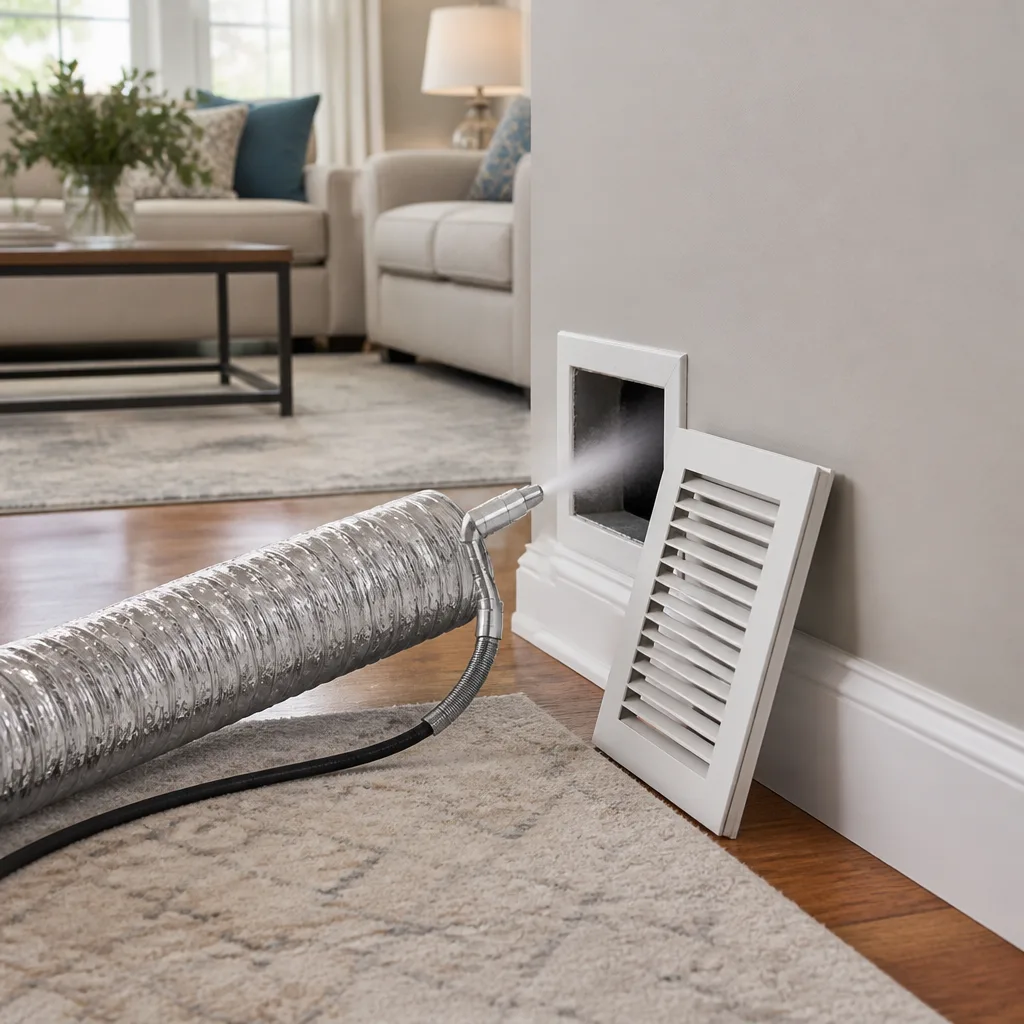 Sanitizing & deodorizing
Whole-system duct and dryer vent check with before-and-after photos - you see exactly what came out of your vents
That "$99 whole-house special" is a bait ad - the real number appears once they are in your hallway, or the "clean" is a shop-vac at the register. We photograph the inside of your ducts before and after instead.
Air Duct Cleaning Permits, Codes & Inspections in University City, NC: What You Need to Know
Most people assume duct work is a permit-free zone. Cleaning is. Modification isn’t. Here’s the misconception that catches University City homeowners: cleaning and routine maintenance sit outside North Carolina’s mechanical contracting rules, but the moment a contractor seals ducts with aerosol sealant, replaces flex runs, or cuts in a new register, the work can cross into licensed HVAC territory that needs a permit and an inspection. Authorize that scope without checking and you can end up with unpermitted work sitting in your walls. This guide explains where the line actually sits under NC law, what Mecklenburg County expects, and how to verify the crew in your driveway before work starts in University City.
Quick Answer
Routine air duct cleaning in University City, NC does not require a permit. Duct sealing with mastic, aerosol sealant, duct liner replacement, and new register or plenum installation can qualify as mechanical work under NC General Statute 87-58, which means the contractor needs a state mechanical contractor license and the job may require a Mecklenburg County permit and inspection. Verify both before you authorize extended scope.
Styles & brands we work with
- Whole-home duct cleaning
- Dryer vent cleaning
- Camera inspection
- Sanitizing & deodorizing
Table of Contents
- What NC General Statute 87-58 Actually Covers
- Cleaning vs. Mechanical Work: Where the Line Sits
- Does Duct Sealing Require a Permit in University City?
- How to Verify an NC Mechanical Contractor License
- The Inspection Process for Duct Modifications
- Dryer Vents, Flex Ducts, and Plenums: What Needs a Permit
- Why Unpermitted Work Can Affect Your Insurance
- How University City’s Climate and Housing Shape the Question
What NC General Statute 87-58 Actually Covers
North Carolina General Statute 87-58 is the statute that defines what counts as heating, plumbing, and air conditioning contracting in this state. It requires anyone who engages in the business of contracting to install, alter, repair, or maintain HVAC systems to hold a license issued by the State Board of Examiners of Plumbing, Heating, and Fire Sprinkler Contractors. That licensing requirement is what separates a legitimate duct and HVAC contractor from a general cleaning business in a van.
The key word in the statute is “alter.” Cleaning the inside surface of a duct system without changing its configuration is straightforward maintenance. Altering the system’s airflow pathway, structural components, or connections is where regulation attaches. In our experience, a lot of University City homeowners get surprised here because the difference isn’t obvious on an estimate sheet. A line item that says “seal and re-connect flex run” reads like maintenance. Under the statute, replacing a run of flex duct and re-attaching it to a boot is closer to alteration.
What falls clearly on the licensed side of the statute:
- Installing, replacing, or relocating duct runs
- Modifying plenum boxes or connections at the air handler
- Installing new supply or return registers, cutting into drywall or ceiling
- Replacing duct liner or internal duct insulation
- Applying aerosol sealant to an entire duct system as part of a mechanical upgrade
- Connecting a new duct run to an HVAC unit
What falls on the maintenance side, no license required to perform as cleaning:
- Source removal cleaning of duct interiors with negative pressure equipment
- Cleaning of registers, grilles, and boots without removing them from the system
- Mechanical agitation of duct surfaces using rotary brush systems
- Sanitizing duct interiors with approved products after cleaning
- Dryer vent cleaning where no vent components are modified
The line isn’t perfectly crisp in every case, and that ambiguity is why you ask the contractor to state plainly which of the two categories your job falls into. A professional working with professional-grade Rotobrush equipment and doing the job correctly will not hesitate to answer. If the answer is fudged, treat that as information.
Cleaning vs. Mechanical Work: Where the Line Sits
Imagine two jobs. In the first, a technician cleans 18 supply runs and two returns, sanitizes, and leaves the system closed exactly as it started. In the second, the same technician finds a crushed flex run in a hallway ceiling and replaces it with new insulated duct, then re-seats a boot that was leaking into the drywall. The first job is cleaning. The second contains licensed mechanical work. Same visit, same worker, two very different regulatory categories.
University City has a specific wrinkle here that matters. This is a community built largely around the UNC Charlotte campus, with a mix of mid-century ranch homes in the older neighborhoods, newer townhome developments, and multi-family properties near the university. A lot of the housing stock has original or first-replacement duct systems, and original systems are exactly where extended scope work gets proposed: a duct that’s failed at a joint, a boot that’s pulling away from the subfloor, an air handler plenum that’s taped together with duct tape instead of mastic. Those are real problems. They’re also not always cleaning problems.
Three questions to put to any contractor before you authorize extended scope:
- “Is this work covered by your NC mechanical contractor license, or is it outside it?”
- “Will this specific scope require a Mecklenburg County permit and inspection?”
- “If it does, who pulls the permit, and will you show me the inspection record when it’s done?”
A contractor with a mechanical license will answer these without flinching. A cleaning-only operation will often try to blur the answer, which is the thing to watch for. Not every cleaning company is dishonest; a lot of them just aren’t set up to do licensed mechanical work and don’t want to lose the invoice.
We work on the cleaning side of this every week. When we spot something that crosses into mechanical scope, we tell the homeowner to get a licensed mechanical contractor involved rather than quietly doing it and hoping nobody notices. That’s not the moneymaking answer, but it’s the answer that protects the house and the homeowner’s coverage.
Does Duct Sealing Require a Permit in University City?
Sometimes. Duct sealing is the single most ambiguous scope item in this trade, and it depends entirely on which method is used. Mastic sealing of accessible joints and connections (brushing on sealant at elbows, boots, and plenum seams) is generally treated as maintenance. Aerosol-based duct sealing, where a fog is introduced into the system to seal thousands of small leaks from inside, is often categorized as an HVAC system modification because it changes the system’s airflow characteristics and requires opening the system at the air handler.
In the jurisdictions that cover University City, the practical test is usually whether the work requires opening the HVAC system in a way that changes its performance, requires access behind drywall or ceiling, or involves components that a mechanical inspector has to sign off on. Mastic on an accessible joint doesn’t pass any of those. Aerosol sealing to correct a documented system leak often does.
Here’s what we’d tell you to do before you say yes to any duct sealing scope:
- Ask which method the contractor is proposing: mastic, brush-on sealant, aerosol, or a combination.
- Ask whether the method requires opening the air handler or plenum. If yes, assume a permit may be needed and ask the contractor to confirm with Mecklenburg County before proceeding.
- Ask what happens if the inspector requires corrections. A licensed contractor handles that; a cleaning-only company will often leave it to you.
- Get the answer in writing on the estimate, not verbally on the day.
One more consideration specific to University City: a lot of the older ranch homes here have duct systems in unconditioned attic space, and summer attic temperatures in this part of North Carolina can push joints past the working range of cheaper sealant tapes. If the sealing scope is being proposed specifically because of a hot-attic failure, that’s a mechanical condition and not a cleaning fix. Ask which it is.
How to Verify an NC Mechanical Contractor License
North Carolina makes this easier than most states. The State Board of Examiners of Plumbing, Heating, and Fire Sprinkler Contractors maintains a public license lookup that any homeowner can search. You don’t need an account, and you don’t need to be a contractor to use it. What you’re looking for is the business name, the license number, and the license classification (Group 1, 2, or 3, depending on the scope of mechanical work authorized).
The trap is what a “general business license” or a NC Secretary of State registration looks like. A lot of cleaning companies are properly registered to do business in North Carolina and will show you paperwork that says so. That registration is not a mechanical contractor license. It’s the equivalent of a business permit, not a trade license. Two different documents, two different agencies, two very different implications for your job.
Here’s how to check before you authorize any extended scope work:
- Ask the contractor for the business name exactly as it appears on the license.
- Search that name through the NC State Board of Examiners of Plumbing, Heating, and Fire Sprinkler Contractors lookup.
- Confirm the license classification covers the scope being proposed (Group 1 is generally limited to certain categories; Group 2 and Group 3 cover broader mechanical work).
- Ask for the qualifying individual’s name attached to the license. Every licensed mechanical contractor has a named qualifying individual; a business without one is not licensed to perform mechanical work.
- If the work involves work on a commercial HVAC system, confirm whether a separate classification or municipality requirement applies.
If the scope is only cleaning, none of this applies. A cleaning crew does not need a mechanical contractor license to clean a duct system, and asking for one when the job is cleaning would be overreach. The ask is appropriate the moment sealing, replacement, or modification comes up. That’s the fork in the road, and it’s worth standing on it before signing.
The Inspection Process for Duct Modifications
If a permit is pulled for duct modifications in University City, the inspection generally happens in two phases: a rough-in inspection before wall or ceiling access is closed, and a final inspection after the system is back in operation. The rough-in is the more important of the two, because once the drywall goes back over a modified duct run, an inspector cannot verify what’s behind it without cutting the wall open again.
This matters for the homeowner because the sequence is often the contractor’s responsibility, not the inspector’s. If the contractor closes the wall before the rough-in inspection, the county can require the wall to be opened back up. That’s a real cost and a real schedule hit, and it lands on whoever signed the contract. In our experience, most disputes about this come down to a contractor who tried to skip the rough-in because they were working without a mechanical license and couldn’t pull the permit.
How the process usually runs:
- Licensed mechanical contractor submits a permit application to Mecklenburg County with the scope of duct modifications.
- County reviews and issues the permit, often with conditions on how exposed duct work must remain for inspection.
- Contractor performs the modifications and contacts the county for rough-in inspection with duct work still exposed.
- Inspector reviews connections, sealing, support, and material compliance, then signs off or issues corrections.
- Contractor closes the wall or ceiling after rough-in approval.
- Final inspection covers the completed system, including airflow performance and connection integrity.
If the work is in an attic or crawl space with existing access, the rough-in is usually simpler. If the work is inside a finished ceiling in a University City townhome or multi-family unit, expect the inspector to require the access to stay open through rough-in. That may delay finish work by a day or more. It’s the right trade-off; a closed ceiling with unpermitted duct work inside is a liability that doesn’t expire.
Dryer Vents, Flex Ducts, and Plenums: What Needs a Permit
Not every scope item is created equal. Here’s how the common jobs we see in University City usually fall:
Dryer vent cleaning
Cleaning a dryer vent is straightforward maintenance with no permit requirement. Replacing the vent duct itself (running new rigid metal ducting through the wall or crawl space) usually requires a permit in most jurisdictions because it involves a change to a mechanical exhaust system, and because dryer vents are a leading cause of residential house fires. Ask the contractor which they’re doing: cleaning the existing vent, or replacing the vent. The first is maintenance; the second is a change to the structure of the home’s exhaust system and should be treated accordingly.
Flex duct swap-outs
Replacing a failing flex duct run is licensed mechanical work. A crushed or torn flex run is being replaced precisely because the current run isn’t doing its job, so the replacement has to meet code for support, insulation, and connection. A mechanical contractor license and typically a permit apply. Cleaning crews that offer “flex duct replacement” as an add-on should be asked how they’re licensed to perform it.
Plenum modifications
Any work at the plenum (the box at the air handler where the ducts connect) is mechanical work. Cutting new takeoffs into a plenum, sealing an existing plenum with mastic, or replacing a plenum box all involve the HVAC system’s core airflow structure. A licensed mechanical contractor and permit usually apply. Cleaning at the plenum (treating the interior surfaces without modification) is cleaning and does not require either.
New register installations
Adding a new supply or return register requires cutting into the duct system and typically the wall or ceiling, plus connecting a new boot and run. Licensed mechanical, permit required. A cleaning-only operation is not licensed for this scope, and it’s one of the common oversteps homeowners encounter without realizing it.
Duct liner replacement
Internal duct liner (the acoustic and thermal lining inside certain duct systems) can degrade over time, and replacing it is a mechanical scope item. Cleaning the liner does not replace the liner. If a contractor recommends “liner replacement” during a cleaning visit, ask which license and permit apply before authorizing.
Why Unpermitted Work Can Affect Your Insurance
Homeowner’s insurance in North Carolina is generally written to cover accidental loss. What it typically does not cover is loss traced to work that was performed without the required permits or licenses, because the insurer argues the loss was a foreseeable consequence of an unpermitted act. The specifics depend on your policy, but the pattern is consistent enough across the industry that it’s worth taking seriously here.
Consider what happens if a modification made to a duct system causes water damage (a plenum improperly reconnected causing condensate to leak into a ceiling), a fire (a dryer vent replacement done without permit and without proper rigid metal), or a mold claim (a duct system altered in a way that touches the HVAC system’s ability to manage moisture). In each of those cases, if the source of the loss traces to unpermitted mechanical work, the insurer can raise the permit question. If the answer is that no permit was pulled and no licensed contractor was involved, a claim can be reduced or denied.
This is why we don’t take shortcuts on the cleaning-versus-mechanical line. The cost of doing the job right is money; the cost of doing it wrong can be a claim. Any cleaning company that suggests duct sealing or modification can happen quickly without “the paperwork” is telling you something about how they operate.
How University City’s Climate and Housing Shape the Question
University City’s climate (hot humid summers, mild winters, and a long cooling season) is hard on duct systems. The HVAC system runs long hours, and the temperature differential between the air handler and a hot attic space creates a constant cycle of expansion and contraction at every joint. Duct runs installed with tape that was fine at the time will often pull free at the tape line within a few years. That’s a joint that needs re-sealing, and depending on accessibility, that’s where the permit question starts to arrive.
The housing mix in University City complicates the general rules. Older ranch homes in neighborhoods around the university may have original duct systems with flex runs that have been patched over by previous owners; the visible scope on those jobs is unpredictable, and it’s exactly where extended scope work shows up. Newer townhome construction is often tighter, but the access panels are smaller, so the rough-in inspection question becomes more important: the inspector needs to see the work before the drywall goes back. Multi-family and rental properties near campus present their own question, because the property manager may not be the person who has to live with the results of unpermitted work.
What we used to see as a clean split (“cleaning” or “remodel”) is really a spectrum now, and University City homeowners benefit from asking the spectrum question up front rather than discovering it mid-job. The question is always the same: which parts of what I’m authorizing are cleaning, and which are mechanical work that needs a licensed contractor and possibly a permit?
For the straight cleaning operations, we cover air duct cleaning as a full-system service, and dryer vent cleaning follows the same permit-free rule until vent components are actually replaced. Our HVAC cleaning work is scoped around cleaning so it stays on the maintenance side. If you want the broader context of how we operate as an indoor air quality specialist in the area, our main University City Air Duct Cleaning page covers all five of our service lines.
Common Mistakes to Avoid
- Accepting a duct sealing scope over the phone without asking about permits. Mastic on accessible joints is usually fine. Aerosol sealing to correct a system-wide leak often isn’t, and the permit question must be answered before work starts, not after.
- Mistaking a business registration for a mechanical license. A NC Secretary of State registration (or a general business license) is not a mechanical contractor license. They come from different agencies and authorize completely different work.
- Letting drywall or ceiling get closed over unpermitted duct modifications. Once the ceiling is closed, the rough-in inspection can’t happen without cutting it open. The contractor who wants to “finish up quickly” is the one to question.
- Authorizing flex duct replacement during a routine cleaning visit. Flex duct replacement is licensed mechanical work. If it comes up during a cleaning visit in University City, stop and ask who’s licensed to do it, and whether a permit is required.
- Assuming replacement dryer vent components are just maintenance. Cleaning the vent is maintenance; replacing the duct run involves a mechanical exhaust system and usually a permit. Two different scopes, two different rules.
- Treating a contractor’s insurance certificate as sufficient. Insurance protects the contractor. It does not give them the license to do the work, and the two documents cover entirely different things.
- Not asking for the inspection record after the job. If a permit was pulled, ask for the inspection sign-off. If the contractor can’t produce one, the work may not have been inspected at all.
See the difference
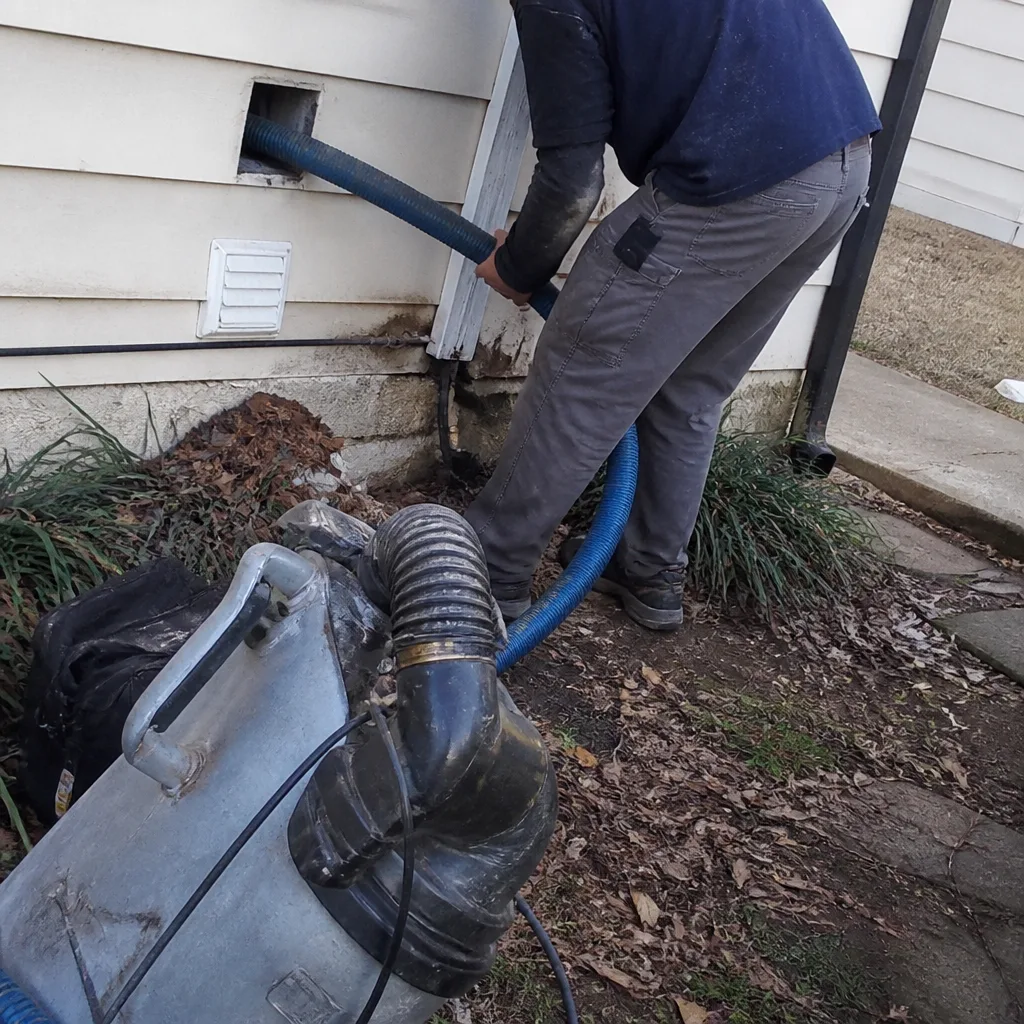 Before
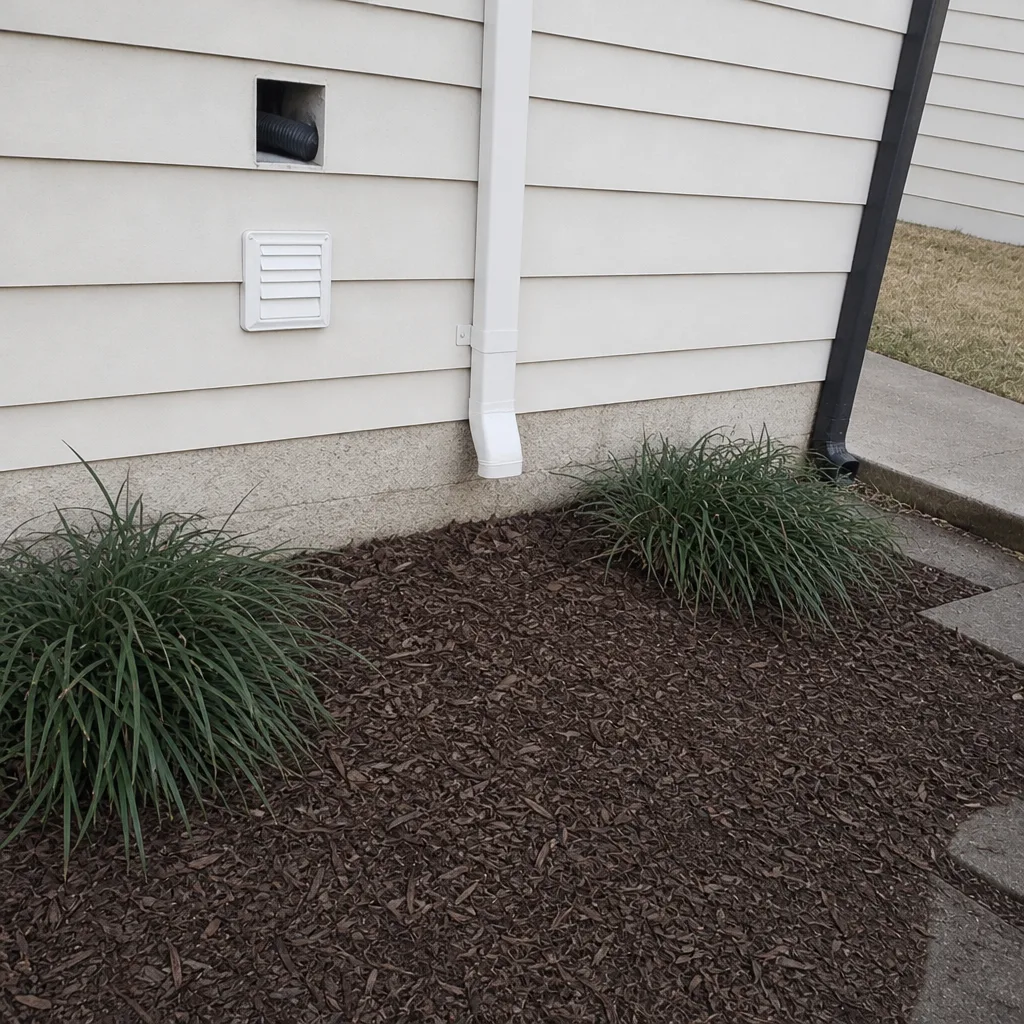 After
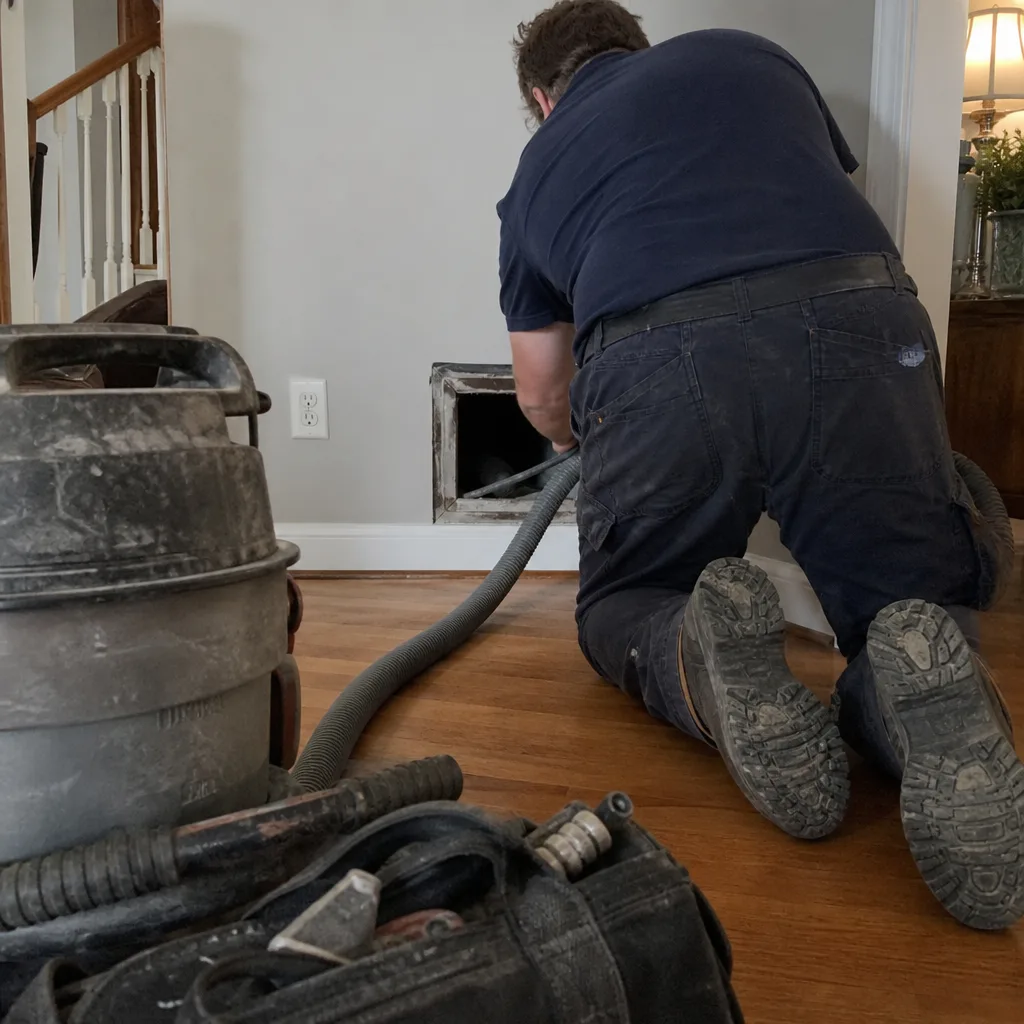 Before
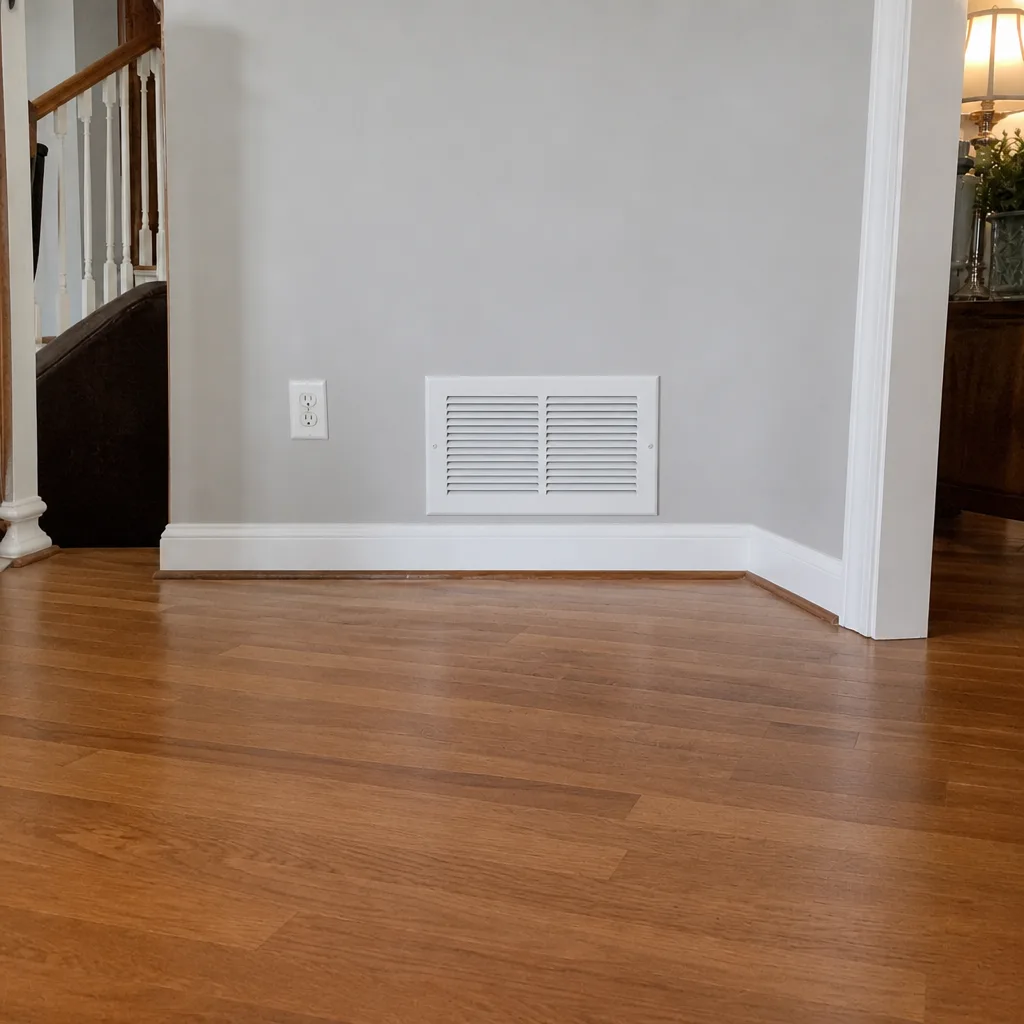 After
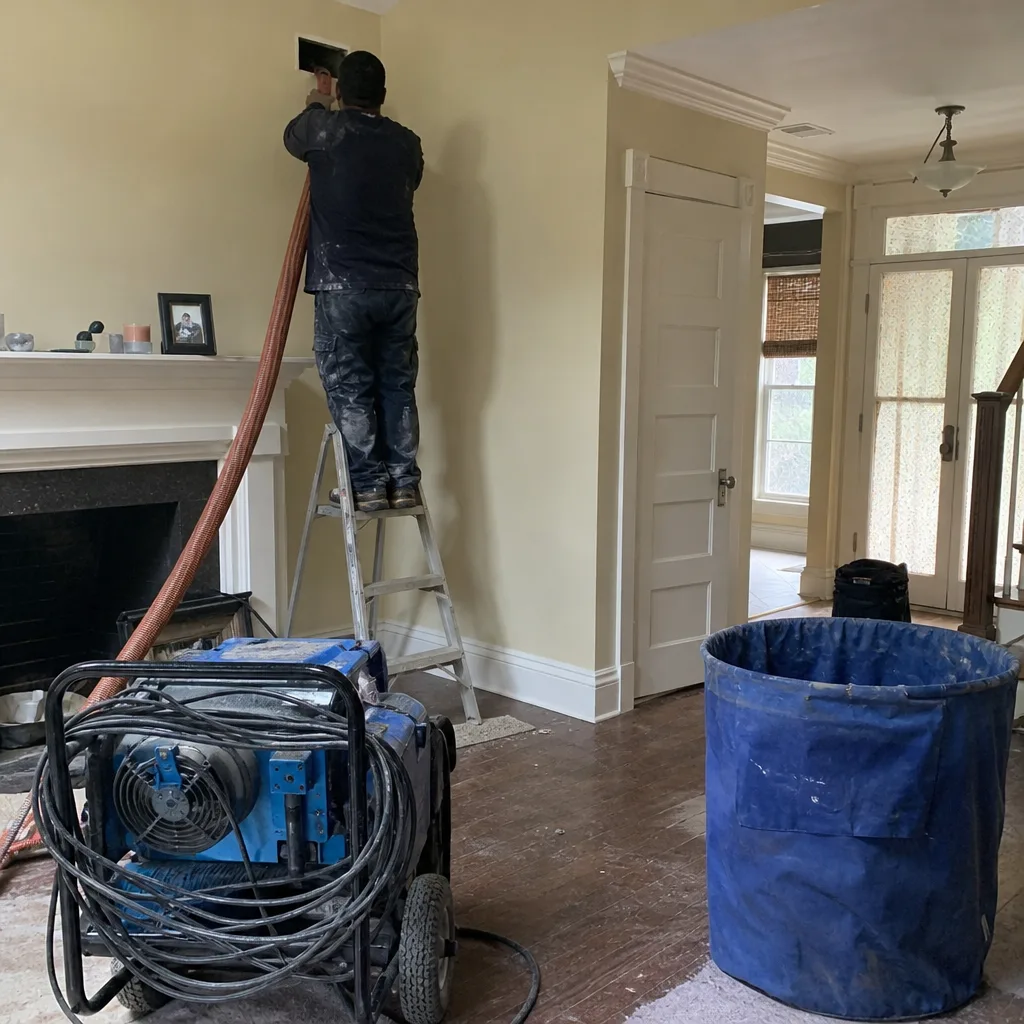 Before
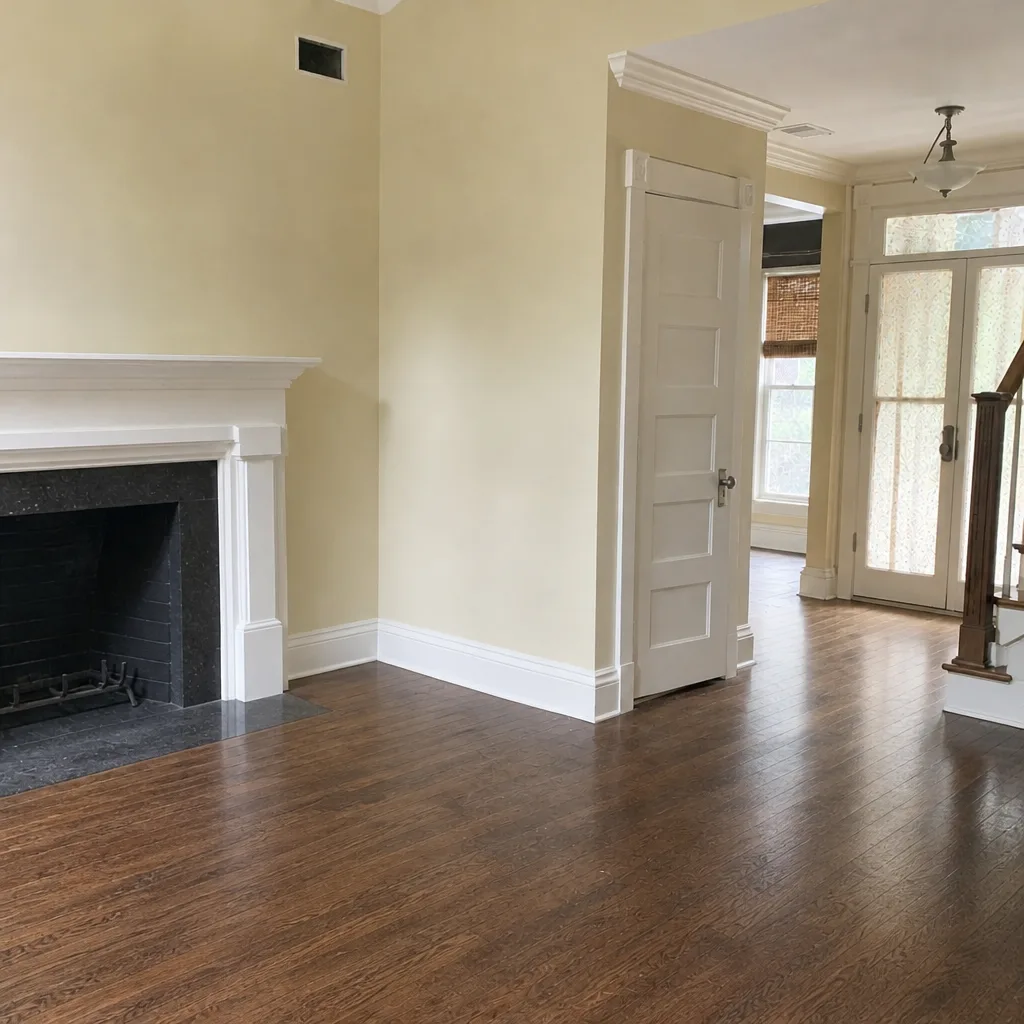 After
When to Call a Professional
If the scope is cleaning only, no permit or license is required, and the decision is straightforward. Call a professional when any of these come up: a contractor proposes duct sealing, flex duct replacement, plenum modification, liner replacement, or a new register installation; a recent renovation left drywall dust or construction debris in the return system; a dryer is taking longer than before and the vent hasn’t been cleaned; or a home you’ve just purchased came with a duct system of unknown origin and no permit history. University City Air Duct Cleaning offers free estimates in University City. Call (888) 972-5826. We answer 24/7. Fast dispatch from 7am to 7pm, Sunday through Friday. We use professional-grade Rotobrush and Abatement Technologies equipment, and we’ll tell you plainly whether your job stays in the cleaning lane or crosses into scope that needs a licensed mechanical contractor.
Frequently Asked Questions
No. Routine air duct cleaning, sanitizing, and register cleaning are maintenance activities that do not require a permit or a mechanical contractor license in University City. The permit question only comes up when the scope includes sealing, modification, or replacement of duct components. If a contractor starts proposing that kind of work during a cleaning visit, ask for a written scope and the licensing answer before agreeing. Call (888) 972-5826 for an exact quote on the cleaning scope – estimates are free.
Sometimes. Mastic sealing of accessible joints is generally treated as maintenance. Aerosol-based duct sealing that changes the system’s airflow characteristics, or sealing that requires opening the plenum or air handler, is often classified as mechanical work under NC General Statute 87-58 and requires a licensed mechanical contractor. The specific classification depends on the method. Call (888) 972-5826 to talk through your scope – estimates are free.
Ask for the business name exactly as it appears on the license, then search that name through the State Board of Examiners of Plumbing, Heating, and Fire Sprinkler Contractors public license lookup. Confirm the license classification and ask which named individual is the qualifying individual attached to the license. A general business registration is not a mechanical license. Call (888) 972-5826 if you’d rather walk through the verification checklist with us – estimates are free.
The work may not pass inspection, and if a claim arises from that work, your insurer can raise the permit question when the claim is filed. That can reduce or deny coverage for a loss that traces back to the modification. Correcting unpermitted work usually means opening the structure back up, pulling the permit retroactively, and paying for an inspection on work completed by someone else. Call (888) 972-5826 for a cleaning-scope estimate so you know which parts of the job are maintenance – estimates are free.
Often yes. Cleaning the existing vent does not require a permit. Replacing the vent duct itself (running new rigid metal ducting through a wall or crawl space) is a change to the home’s mechanical exhaust system and typically requires a permit. Ask the contractor which they’re proposing: cleaning or replacing. Call (888) 972-5826 to schedule a dryer vent cleaning where no component changes are involved – estimates are free.
The inspection itself is usually brief once it’s scheduled; the timeline depends mostly on county scheduling for the rough-in and final inspections, and on whether corrections are required. The part that matters is keeping the duct work exposed for rough-in before drywall or ceiling goes back up. We answer 24/7 at (888) 972-5826 if you want to talk through what’s cleaning and what isn’t before you authorize scope.
The Bottom Line
Cleaning is maintenance. Modification is mechanical work. In University City, the difference sits between a routine cleaning visit and any scope that touches duct sealing methods, flex replacement, plenum work, liner replacement, or new register installations. NC General Statute 87-58 requires a licensed mechanical contractor for the second category, and Mecklenburg County permits and inspections usually follow. Verify the license through the state board lookup, ask which category each scope item falls in, insist on the rough-in inspection before the ceiling closes, and keep the inspection records. Cleaning crews should stay in the cleaning lane, and if a proposal goes beyond it, ask who’s licensed to do the work and who’s pulling the permit.
Written by the team at University City Air Duct Cleaning.