
Last updated November 22, 2026
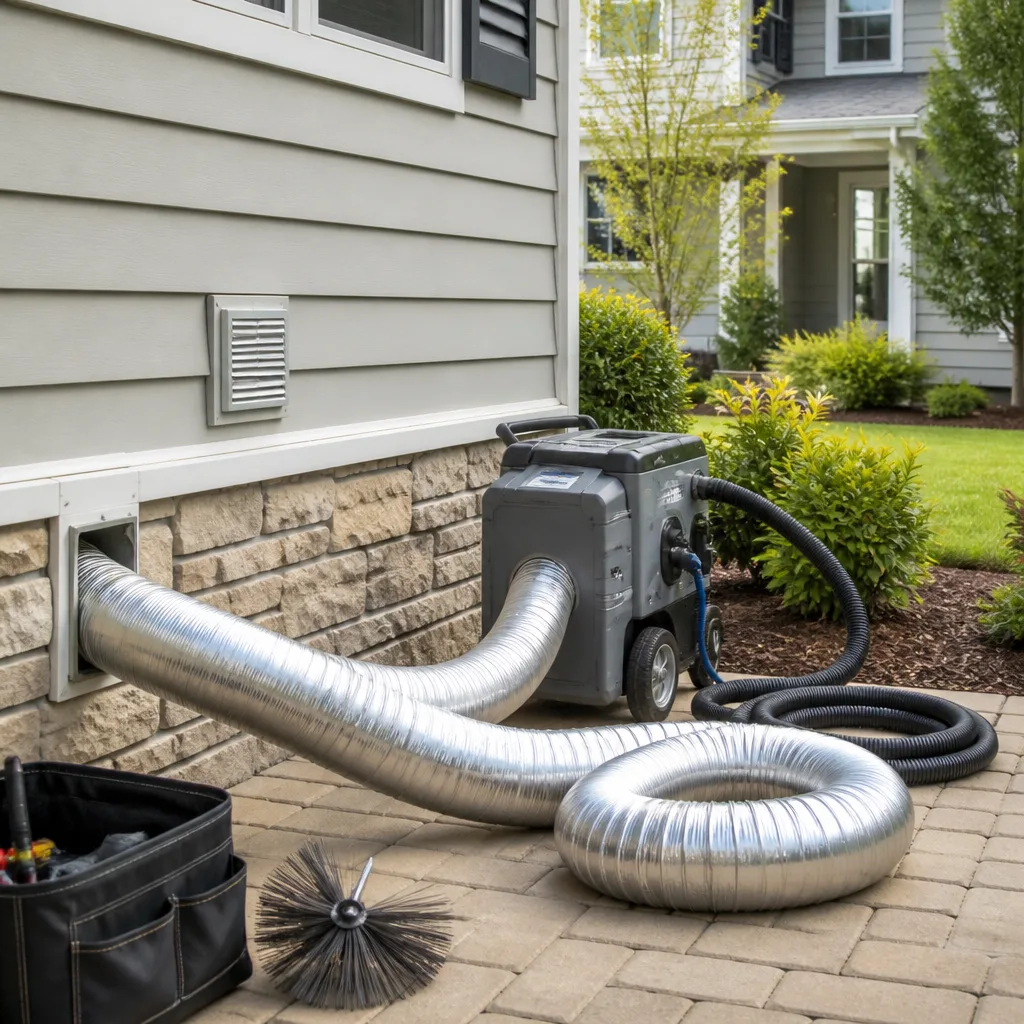 Whole-home duct cleaning
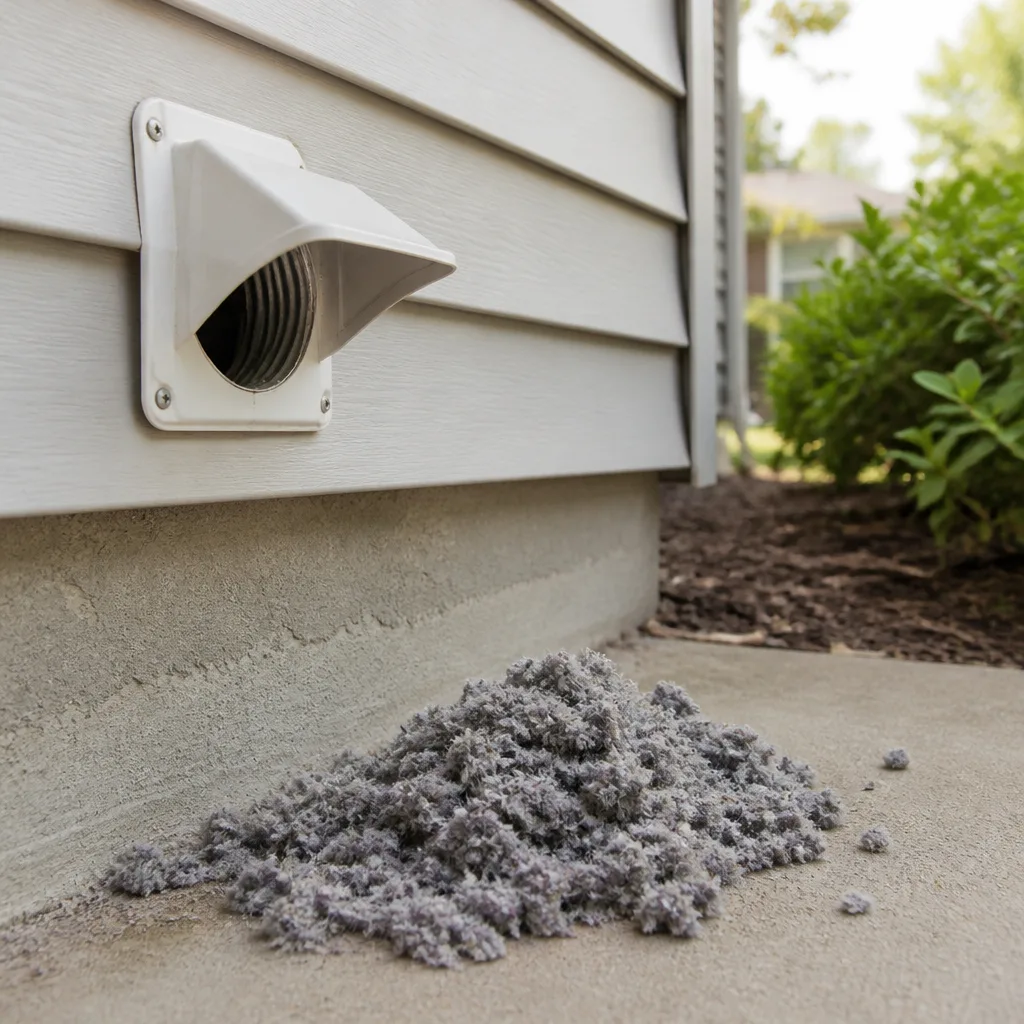 Dryer vent cleaning
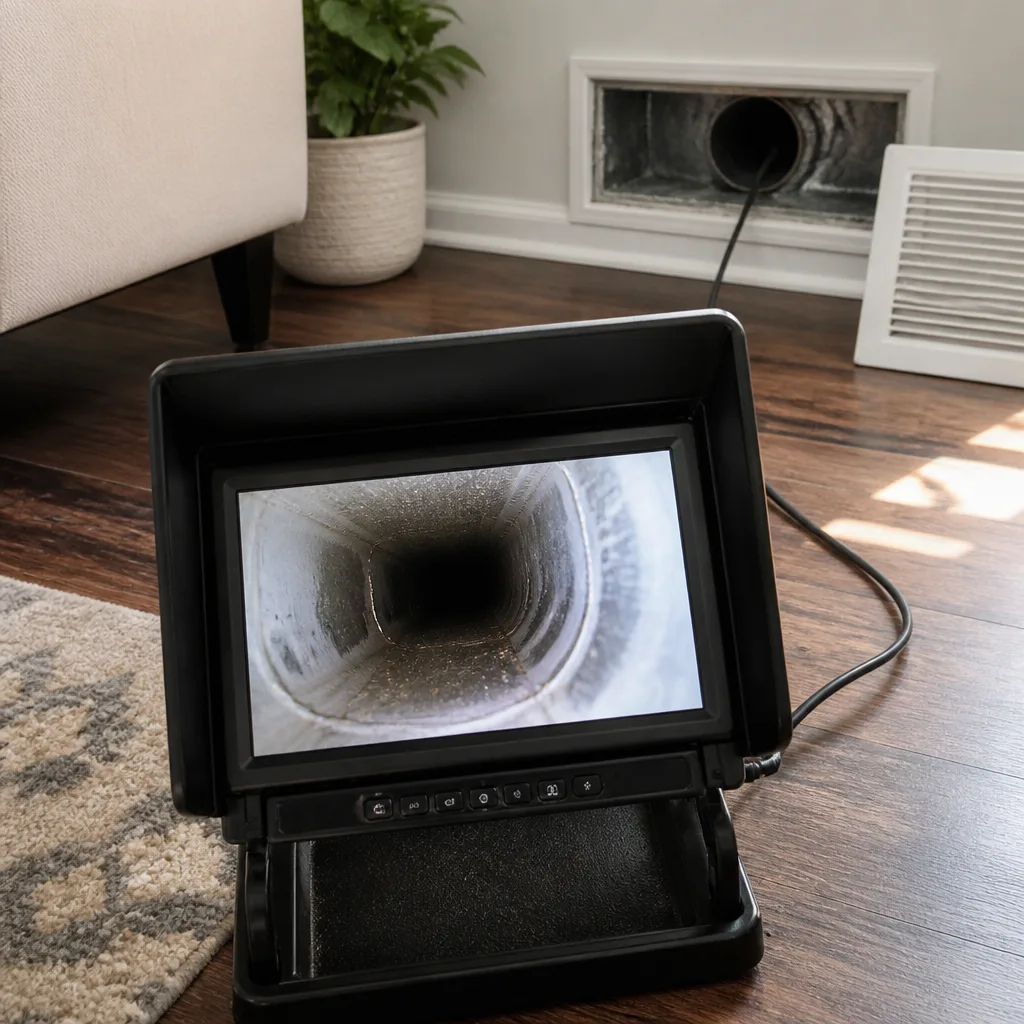 Camera inspection
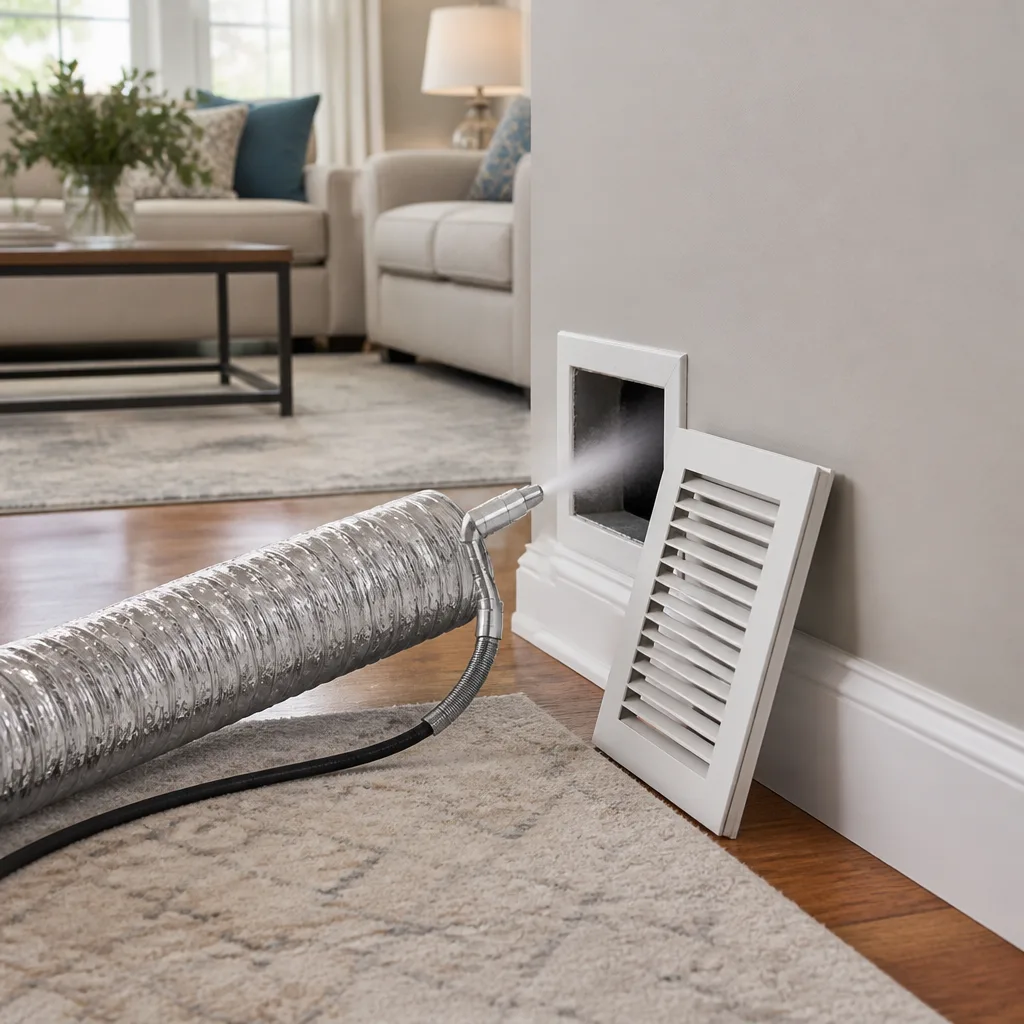 Sanitizing & deodorizing
Whole-system duct and dryer vent check with before-and-after photos - you see exactly what came out of your vents
That "$99 whole-house special" is a bait ad - the real number appears once they are in your hallway, or the "clean" is a shop-vac at the register. We photograph the inside of your ducts before and after instead.
Choosing the Right Air Duct Cleaning Brand: A Buyer’s Guide for University City
Here’s something most homeowners don’t realize: two trucks bearing the same national franchise name can arrive with completely different equipment, different training, and different standards. The brand painted on the side tells you almost nothing about what’s actually inside your ducts when the work starts. Several nationally franchised duct cleaning brands operate as independently owned locations, and each location sets its own equipment standards and its own definition of “done.” That means the logo on the van is a poor proxy for quality. This guide teaches you to evaluate the operation itself, using University City homes as the reference point, so you can judge a company by what it deploys and how it answers questions, not by how familiar its name looks on a coupon.
Quick Answer
The right air duct cleaning company in University City isn’t the biggest name or the cheapest quote. It’s the operation that can show you professional-grade equipment like Rotobrush or Nikro systems, verify NADCA membership and ACR certification, describe its full service scope beyond cleaning, and answer technical questions fluently on the first call. Judge the operation, not the logo. And always get a flat, whole-system price in writing before anyone touches your ducts.
Styles & brands we work with
- Whole-home duct cleaning
- Dryer vent cleaning
- Camera inspection
- Sanitizing & deodorizing
Table of Contents
- Why Duct Cleaning Has No Real Brand Hierarchy
- NADCA Membership and ACR Certification: The Signals That Matter
- Equipment as the Real Brand Proxy
- Local vs. National: The Tradeoffs That Affect You
- The Phone Call Test: How to Evaluate a Company in Ten Minutes
- Reading a Quote: What a Real Whole-System Estimate Includes
- One-Time Transaction or Long-Term Relationship?
- What University City Homes Need From a Duct Cleaner
Why Duct Cleaning Has No Real Brand Hierarchy
When you buy an air conditioner, brand matters. Carrier, Trane, and Lennox compete on manufacturing specs, and a cheaper unit genuinely performs differently from a premium one. Duct cleaning doesn’t work that way. There’s no manufacturing layer to compare, no spec sheet that separates one franchise’s work from another’s. What separates one job from another is entirely operational: the equipment on the truck, the training of the technician, the scope of the service, and whether the company follows a defined process or just waves a hose around for a while.
This is the misconception worth holding onto: duct cleaning brand recognition is mostly marketing reach. A national name buys radio spots and coupon mailers. It doesn’t buy you a better-cleaned plenum.
Here’s what actually varies from operation to operation, even under the same franchise banner:
- Equipment grade. Some locations run professional negative-pressure vacuums and rotary agitation tools. Others run a shop vac, a blower, or nothing at all and call it cleaning.
- Technician training. Some crews train on rotary brush systems and air handling units. Others are hired, handed a hose, and sent out the same week.
- Service scope. Some clean only what you can see from the register. Others treat the whole air pathway: intake, ducts, air handler, coil, and exhaust.
- Verification. Some photograph before and after. Others hand you a receipt and leave.
For a University City homeowner, that spread is the entire ballgame. The name on the van is a coat of paint. The equipment, the training, and the process underneath it determine whether your ducts get clean or just get disturbed. So instead of asking “which brand is best,” the more useful question is “what does this specific operation actually do, and can it prove it?”
NADCA Membership and ACR Certification: The Signals That Matter
NADCA membership and ACR (Air Systems Cleaning Specialist) certification are the two credentials that tell you a duct cleaning company has agreed to a defined standard of care and can prove its technicians know how to apply it. NADCA is the industry association that publishes the cleaning standards contractors are measured against, and ACR certification is the individual technician credential tied to those standards. If a company can’t verify either, you’re evaluating based on marketing alone.
The good news is verification is fast. You can confirm both in about two minutes:
- Ask directly. On your first call, ask whether the company is a NADCA member and whether the technicians who will do the work hold ACR certification. Note whether the answer is immediate or vague.
- Check the NADCA directory. NADCA maintains a directory of member companies. Look up the specific company name, not a franchise parent name.
- Ask for the technician’s name. Certification is held by individuals, not by vans. Ask who’s performing the work and whether they hold ACR.
- Cross-check the quote. A NADCA-standard job will mention negative pressure, source containment, and a defined post-cleaning verification step. A quote that only says “duct cleaning” and a price doesn’t.
We want to be clear about what credentials do and don’t prove. Membership and certification don’t guarantee a perfect job, and their absence doesn’t automatically mean a bad one. What they do is tell you the company has chosen to be measured against an outside standard and is accountable to an association if it falls short. For a University City homeowner evaluating a stranger with a hose, that’s the kind of signal worth relying on.
Equipment as the Real Brand Proxy
The equipment a duct cleaning company runs is a better indicator of its professionalism than the company name on the invoice. A proper residential job needs a negative-pressure vacuum capable of pulling a strong, sustained air flow through the system, plus an agitation tool that physically dislodges debris from duct walls. Without both, cleaning is a surface gesture; with both, the whole system actually gets cleaned.
Here’s what to listen for when you ask about equipment:
- Rotobrush or equivalent rotary agitation. These systems spin a whip through duct runs to break material loose from the walls. Rotobrush is the name most often used in the residential market and is the standard to ask about.
- Nikro or comparable HEPA vacuum systems. Nikro makes professional-grade filtration vacuums that hold collected debris under vacuum. Shops that use them are generally set up for real containment rather than blowing dust back into the room.
- Abatement Technologies air filtration. Abatement equipment is typically used for serious indoor air quality remediation, not just routine maintenance. If a company works with it, that’s a sign of technical depth.
- Source containment. Any professional operation will put the system under negative pressure and seal off supply points before agitation begins, so debris is pulled out rather than pushed around.
Ask this question on the phone: “What vacuum system and agitation tools will the crew use, and how do you keep debris out of my house during the job?” A technically fluent answer names specific equipment and describes containment. A volume-based operation says “we use a powerful vacuum” and moves on. That difference in vocabulary is the clearest crack between professional and improvised.
Our own work is built around professional-grade Rotobrush, Nikro, and Abatement Technologies equipment, and we stock and service Honeywell and Aprilaire whole-home air quality products so that cleaning is the starting point, not the endpoint. To understand what the full scope of a proper cleaning looks like, our air duct cleaning page walks through each step of the process.
Local vs. National: The Tradeoffs That Affect You
Choosing between a local and a national duct cleaning company is a real decision with real tradeoffs, not a simple case of one beating the other. National franchises offer name recognition and marketing familiarity. Local operations offer accountability, follow-up ability, and familiarity with how homes in a specific area are actually built. For most University City homeowners, the local tradeoffs matter more over time.
Here’s how the tradeoffs usually play out:
- Response time. A local operator setting its own schedule can usually get out faster and follow up on a callback without triaging it through a franchise system.
- Accountability. When a problem arises, who owns it? A local operation is answerable directly for its own work and its own reputation, without a corporate middle layer.
- Familiarity with local construction. University City homes range from older bungalows and mid-century ranch layouts to newer builds in growing subdivisions. Ductwork differs sharply across those categories. Whoever’s doing the work needs to recognize how return duct runs, plenum configurations, and flex versus rigid duct interact before starting.
- Warranty follow-up. If work is backed by anything, a local company you can call again is easier to hold to it than a franchise location that may change ownership or ownership of records.
- Consistency of scope. A local full-system specialist typically offers the same service lines on repeat visits. A national franchise location’s offerings can vary based on what its owner chose to buy and train on.
The clear case where a national name does win is if that specific location runs better equipment and better training than the local alternative. Don’t assume either side is inherently superior. Check both against the same criteria: equipment, credentials, and scope.
The Phone Call Test: How to Evaluate a Company in Ten Minutes
The initial phone call is the most useful brand evaluation tool you have, because it reveals how a company thinks before any money has changed hands. A technically fluent operation will ask you specific questions about your system. A volume-based operation will ask for your address and offer a slot. Listen to which questions get asked.
Here are the questions you should be ready to ask, and what a good answer sounds like:
- “What equipment will you run?” Good answer: named systems and containment. Poor answer: “a commercial vacuum.”
- “Will you clean the air handler and coil or just the ducts?” Good answer: describes what’s included and what isn’t. Poor answer: “we clean everything.”
- “How will you know when the job is done?” Good answer: describes a verification step, often photos. Poor answer: “when you’re satisfied.”
- “Is this a flat price for the whole system?” Good answer: yes, in writing before work starts. Poor answer: a per-vent price, a coupon, or a “starting at” figure.
What a good operation asks you is equally revealing. A technician-calibrated company will ask about your system age, whether you’ve had recent renovations, whether anyone in the home has allergies, whether you’ve noticed dust buildup patterns, and whether your dryer vent has ever been serviced. Those questions demonstrate a real interest in the whole air pathway. If the call starts with “what’s your address and when can we come,” you’ve likely reached a scheduling operation, not a specialist.
If your ductwork is faulty, damaged, or poorly sealed, cleaning alone won’t solve the problem. Ask during the phone call whether the company offers repair and sealing alongside cleaning. If the answer is no, you may be dealing with a cleaner, not a full-system operation.
Reading a Quote: What a Real Whole-System Estimate Includes
A legitimate duct cleaning quote in University City should be a flat price for the whole system, agreed before any work begins, and should describe exactly what will be cleaned, how, and with what equipment. If a quote is a per-vent price, a teaser amount, or a number that grows as the technician walks through the house, treat it as a scheduling hook rather than a real estimate.
Here’s how to read a quote:
- Whole-system language. The estimate should specify supply runs, return runs, and the air handler. A quote that says only “duct cleaning” without listing coverage is ambiguous and will be interpreted aggressively on site.
- Flat price, in writing. The written estimate is what gets charged. There should be no per-vent upcharge added after the technician arrives.
- Named equipment. A professional estimate names the equipment being deployed.
- Before-and-after verification. Photos of your own ducts, not stock images from a brochure, are the standard on professionally performed work.
- Added service lines broken out separately. If your dryer vent, HVAC system, or duct repair needs attention, a good estimate separates each line rather than lumping everything into one unexplained number.
The bait-and-switch reputation this industry has earned comes from the gap between the teaser coupon and the amount eventually charged. The defense is simple: insist on one flat price for the whole system, in writing, before a technician takes a tool off the truck. That single requirement separates the operators who are confident in their scope from the ones whose business model depends on escalating the invoice.
For a full-system quote covering ducts, air handler, and coil together, our HVAC cleaning page explains what’s included when the whole pathway is serviced as one job.
One-Time Transaction or Long-Term Relationship?
Rotating through promotional offers from multiple duct cleaning providers is more expensive over the years than building a relationship with one full-system specialist. Each new provider starts from scratch, has no record of what your system looked like last time, and no reason to do anything beyond the coupon’s scope. A consistent specialist accumulates a picture of your home’s air pathway, knows what changed, and can spot developing problems before they become repair jobs.
Think about it in terms of what each visit produces:
- A promotional call. Usually a fixed-scope cleaning at a fixed price, often with an upsell attached. No continuity. No record. The next provider starts over.
- A relationship with a specialist. The technician remembers your system’s configuration, notices that a return duct needs attention, flags that the dryer vent is showing buildup again, and knows whether Honeywell or Aprilaire products make sense for your home now versus later.
The full-service operation wins on lifetime value for exactly this reason. A company that can clean, sanitize, repair, and seal can address the root cause of what brought you to the phone, not just the symptom. If you have a damaged flex run, a failing seal at the plenum, or contamination re-entering through gaps, a cleaning-only provider leaves the underlying defect. A full-system specialist fixes it in the same visit. That’s the difference between building a service record and buying a cleaning.
When we look at a home in University City, we’re thinking past the current visit. What condition are the ducts in? Where’s the contamination coming from? What’s the state of the dryer vent, which is a separate safety concern. Addressing all of it in one coordination improves the system, not just the air in one room.
What University City Homes Need From a Duct Cleaner
University City is a part of Charlotte with a wide age and construction spread, and the duct work inside its homes varies just as widely. A buyer’s guide is only useful if it accounts for that spread. When you evaluate a company, consider whether it can handle what your particular home actually has, not just what a generic brochure describes.
Here’s what to weigh against the local housing stock:
- Older homes and mid-century layouts. These often have undersized return runs, less efficient boots, and ductwork that’s been modified over several decades. A cleaning company that only handles simple systems may not recognize the issues.
- Newer subdivisions. Newer builds often use flex duct in longer runs. Flex duct is easy to damage during aggressive cleaning, so the technician’s technique and agitation tools matter.
- Renovation and addition work. Any home that’s had a remodel in recent years has likely had duct alterations, sometimes with poorly sealed joints. Ask how the company checks for leaks and gaps as part of the cleaning visit.
- Pollen and seasonal dust. The University City climate brings a long pollen season and warm, humid months that encourage dust and biological growth in the system. Homes that run HVAC nearly year-round accumulate that load quickly.
- Dryer vent safety. Lint buildup in the dryer vent is one of the leading causes of residential house fires, and the risk rises with household laundry volume. A company that includes dryer vent cleaning in its service scope is thinking about the whole exhaust pathway, not just supply comfort.
For a discussion of how the whole system works together, our main University City Air Duct Cleaning page covers the interconnect between supply, return, air handler, and exhaust. The point for a buyer is this: match the company’s scope to your home’s configuration. A cleaner who only services one part of the system can’t be the right choice for a home that needs the whole pathway addressed.
Common Mistakes to Avoid
- Choosing by name recognition alone. A familiar franchise name doesn’t tell you what equipment shows up or who’s running it. Two locations under the same banner can operate completely differently. Evaluate the specific operation on the specific job.
- Accepting a per-vent quote. Per-vent pricing is the mechanism that turns a small teaser coupon into a very large invoice once the technician is in the house. Insist on one flat price for the whole system, in writing.
- Skipping the equipment question. If the company can’t name the vacuum and agitation systems it uses, you have no way to know whether the job will actually clean or just disturb dust back into the living space.
- Ignoring the air handler and coil. Cleaning only the visible ducts leaves the biggest collection points untouched. A company that cleans ducts but not the air handler has done half the job at full price.
- Forgetting the dryer vent. It’s a separate system with a separate, serious risk profile. A duct cleaner who doesn’t address dryer vent cleaning is leaving a known safety issue on the table.
- Not asking about repair and sealing. If your ducts leak, cleaning them doesn’t fix the leak, and the contamination comes right back. Ask whether the company can repair and seal as a service line, or only clean.
- Hiring on coupon instead of on scope. The cheapest advertised price is almost always a fixed-scope entry point. Compare quotes by what’s included for the flat price, not by the headline number.
See the difference
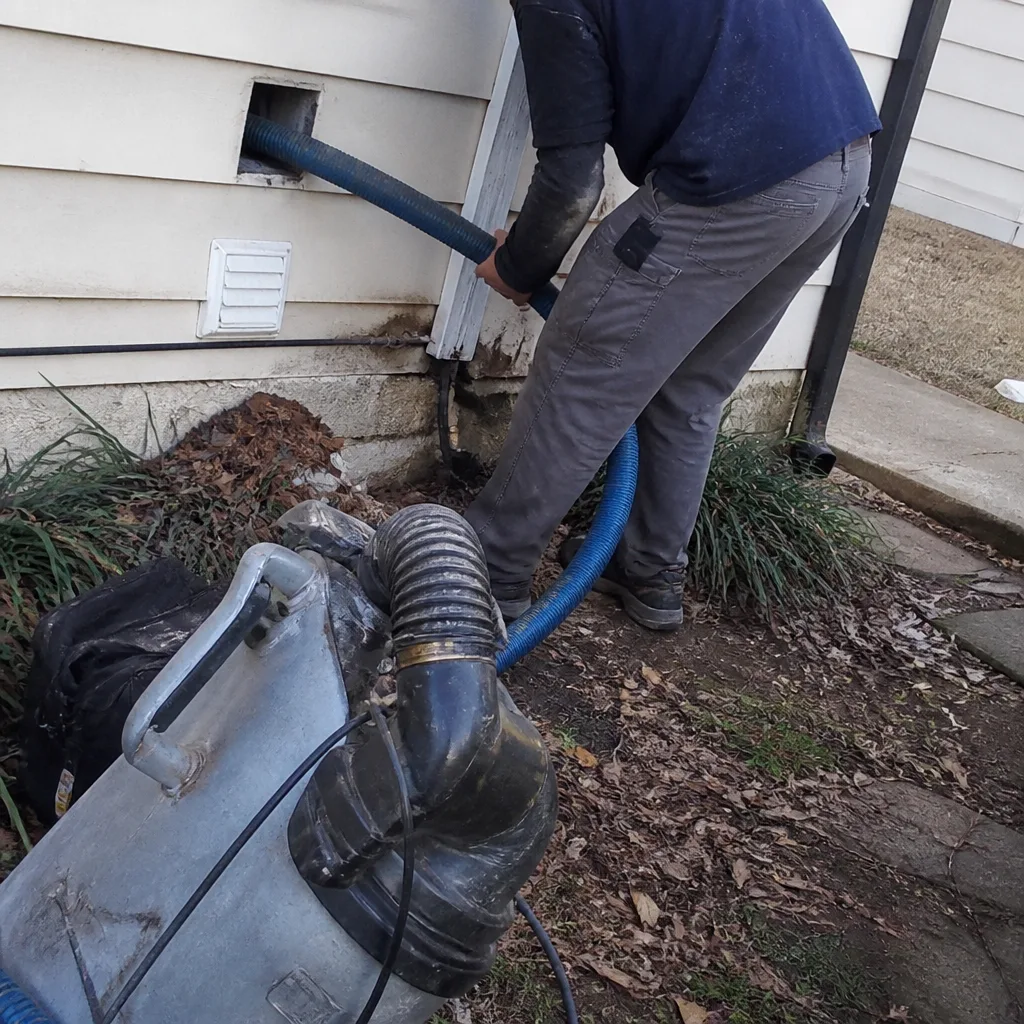 Before
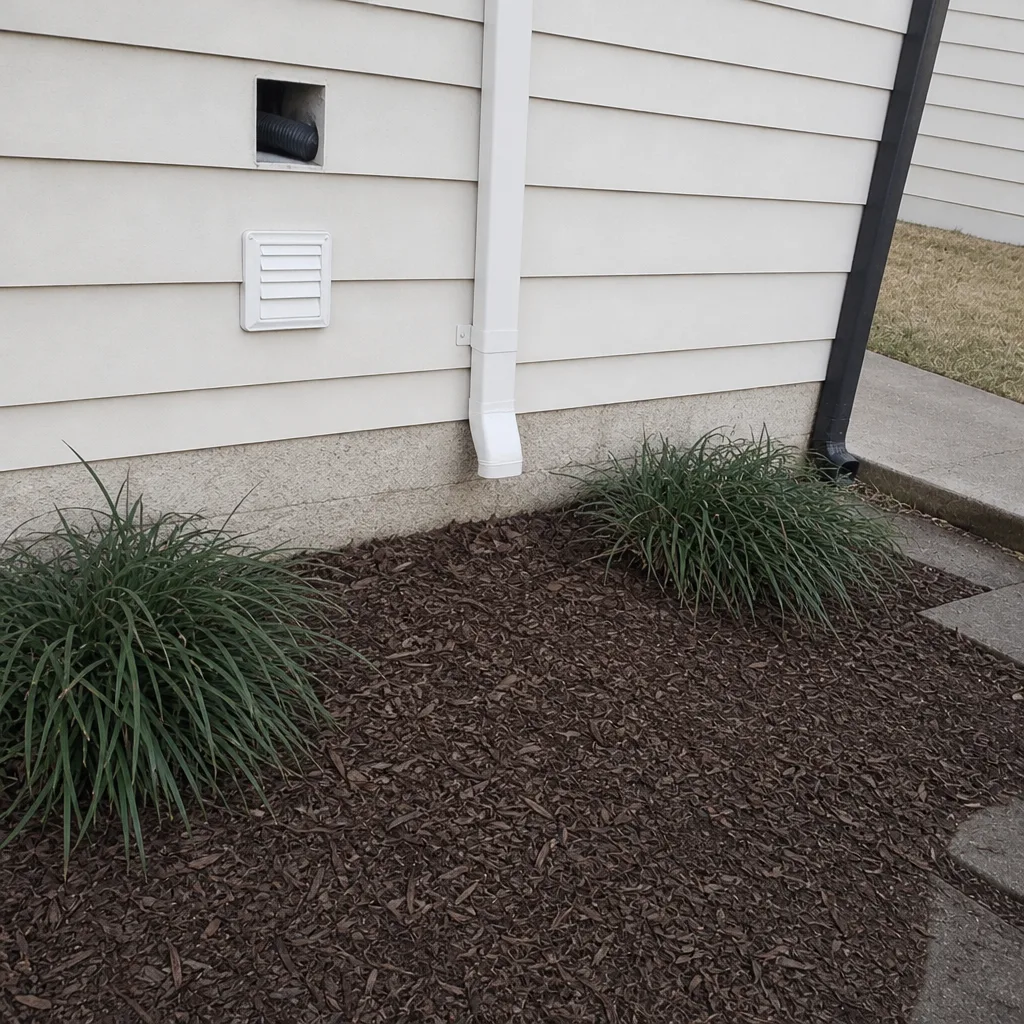 After
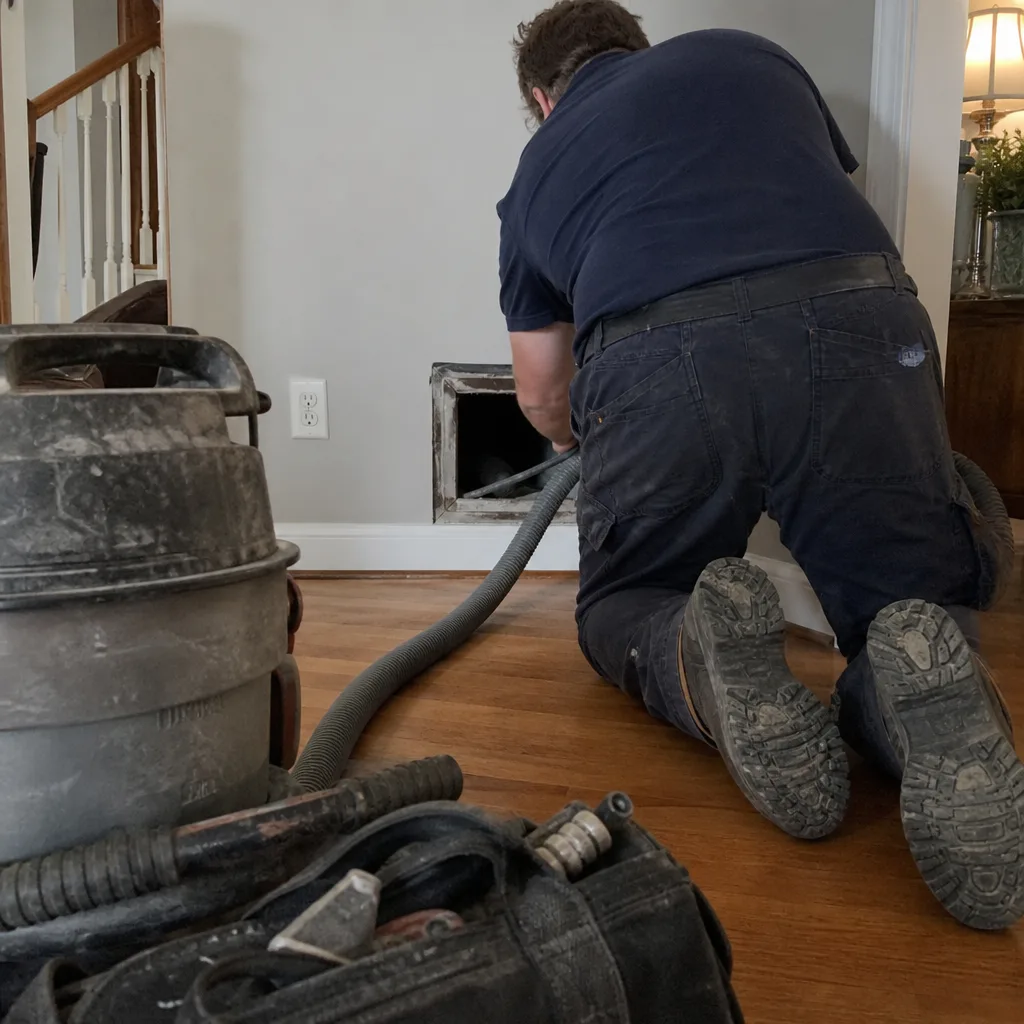 Before
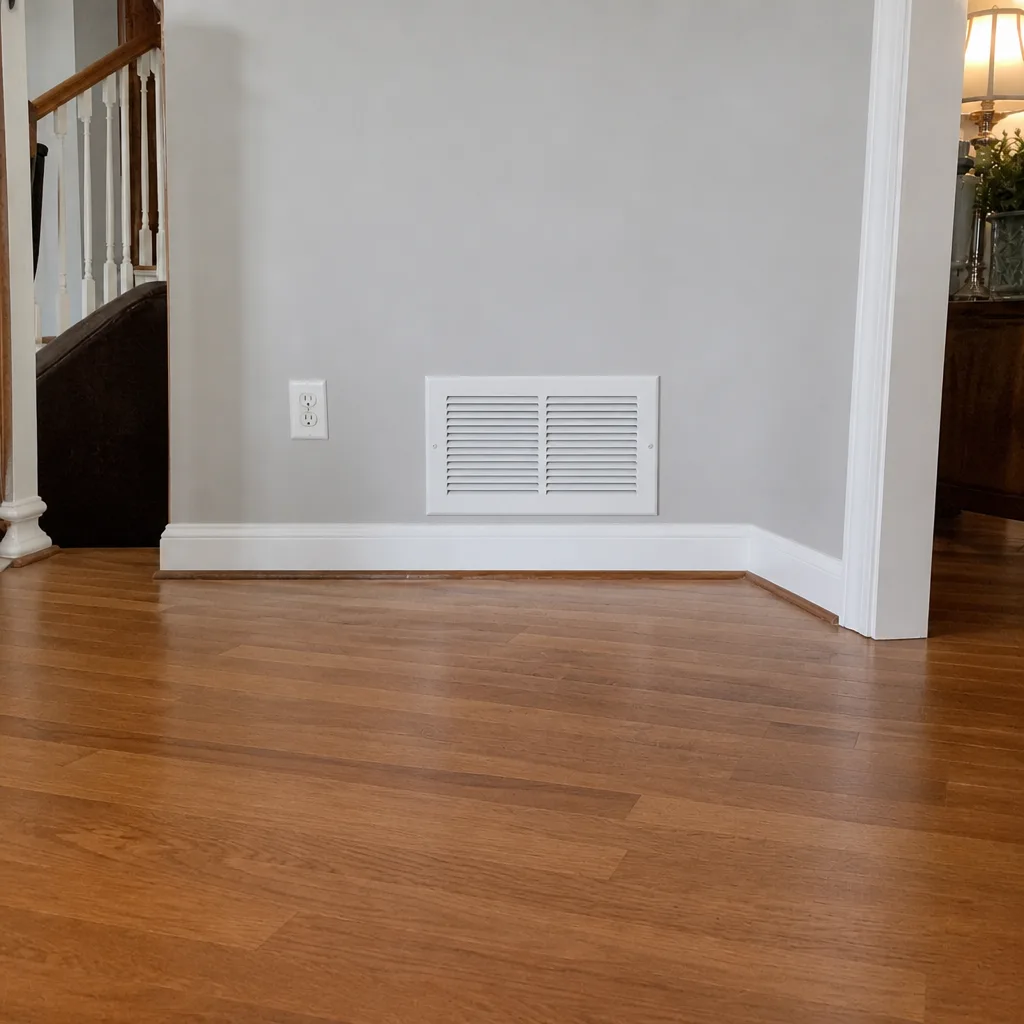 After
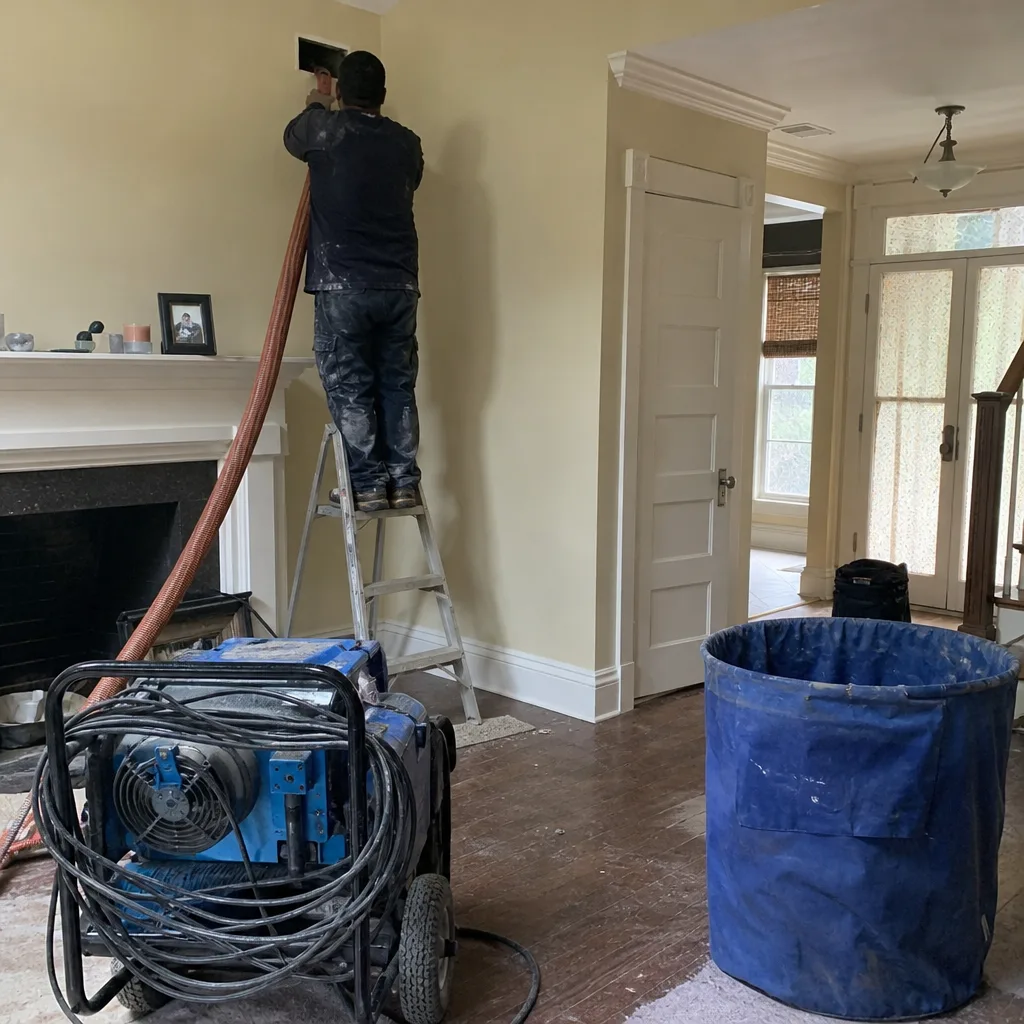 Before
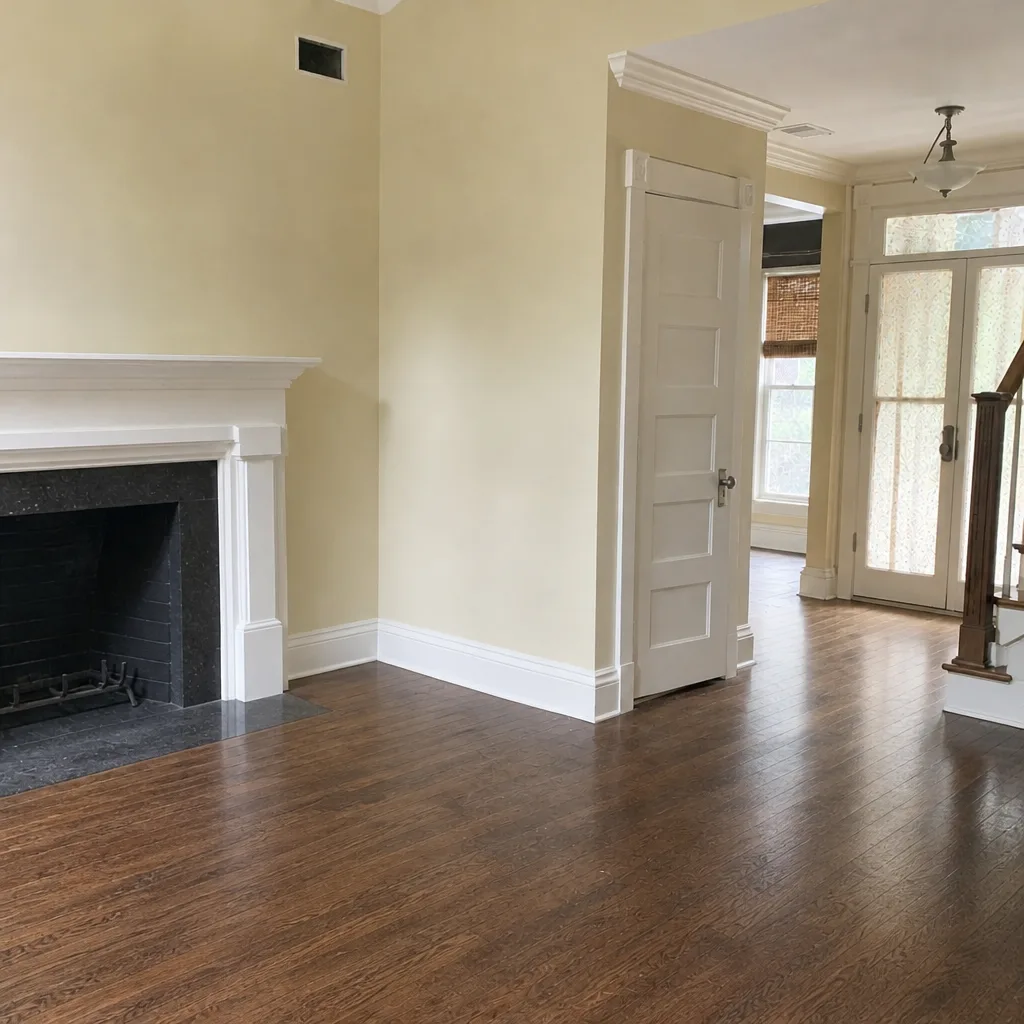 After
When to Call a Professional
It’s time to call a professional when you notice consistent dust accumulation shortly after cleaning surfaces, when anyone in the household has allergies or respiratory sensitivity that seems to worsen indoors, when you’ve recently finished a renovation that disturbed a lot of debris, or when your system has never had a documented cleaning. It’s also time when the dryer vent has gone more than a season without inspection, since lint buildup is a genuine fire-risk concern. If your ductwork is visibly damaged or has separated joints, a professional evaluation beats a cleaning alone, because covering a broken duct with a vacuum misses the underlying problem. University City Air Duct Cleaning offers free estimates in University City. Call (888) 972-5826. We answer 24/7. Fast dispatch from 7am to 7pm, Sunday through Friday.
Frequently Asked Questions
The best company is the one that can prove its equipment, credentials, and scope before you hire it. Ask which professional-grade vacuum and agitation systems it uses, whether its technicians hold ACR certification or work under NADCA standards, and whether it offers repair and sealing as a full-system service. Call (888) 972-5826 for a free estimate and note how directly the questions get answered.
Yes. NADCA membership tells you the company has chosen to be measured against an industry standard and remains accountable to an outside organization. It doesn’t guarantee a perfect job, but it does separate operations that have committed to defined standards from those that haven’t. You can verify membership on the NADCA directory in about two minutes, and it’s worth the time. Call (888) 972-5826 to ask us specific questions about ours.
Low initial quotes usually cover a narrower scope than the job requires: fewer supply runs, no air handler, no coil, no containment, and no repair work. The gap between the teaser price and the final invoice often comes from add-ons that arrive once the technician is on site. Look for one flat price for the whole system, in writing, before work starts. Call (888) 972-5826 for a free estimate that covers the full scope.
It matters for accountability and follow-up, not for the brand name itself. A local operation can respond directly to callbacks and warranty questions, and knows how University City homes are typically built, from older layouts to newer subdivisions. A national franchise location can be excellent if its specific owner runs good equipment and training, but that varies location to location. Judge the operation, not the logo. Call (888) 972-5826 to talk through what your home needs.
Yes, if the company offers both services, because dryer vent lint buildup is a leading cause of residential house fires and is a separate safety concern from comfort. A full-system visit that addresses the dryer vent alongside the ducts handles the entire air pathway in one coordination. Call (888) 972-5826 to find out what’s included in your estimate.
A full-system specialist can still handle a straightforward cleaning-only visit, and the flat price should reflect the scope you actually need. The value of choosing a full-system company is that if the technician finds damage, separated joints, or a dryer vent that needs attention, you’re already talking to someone who can address it instead of needing a second company. Call (888) 972-5826 to book a free estimate and see what your system needs.
The Bottom Line
Duct cleaning doesn’t have a brand hierarchy the way HVAC manufacturing does. The name on the van tells you nothing about what’s actually inside your ducts when the work begins. What matters is the operation: the equipment (Rotobrush, Nikro, Abatement Technologies), the credentials (NADCA membership, ACR certification), the scope (cleaning, sanitizing, repair, sealing), and the process (flat whole-system price, before-and-after photos, source containment). Evaluate the operation, not the logo. Check the credentials. Ask the equipment questions. Insist on a flat written estimate. And treat the first phone call as the test that matters. For a free estimate in University City, call (888) 972-5826. We answer 24/7, with fast dispatch from 7am to 7pm, Sunday through Friday.
Written by the team at University City Air Duct Cleaning.